Mr Nathan Harrison and Dr Ashlea Bartram
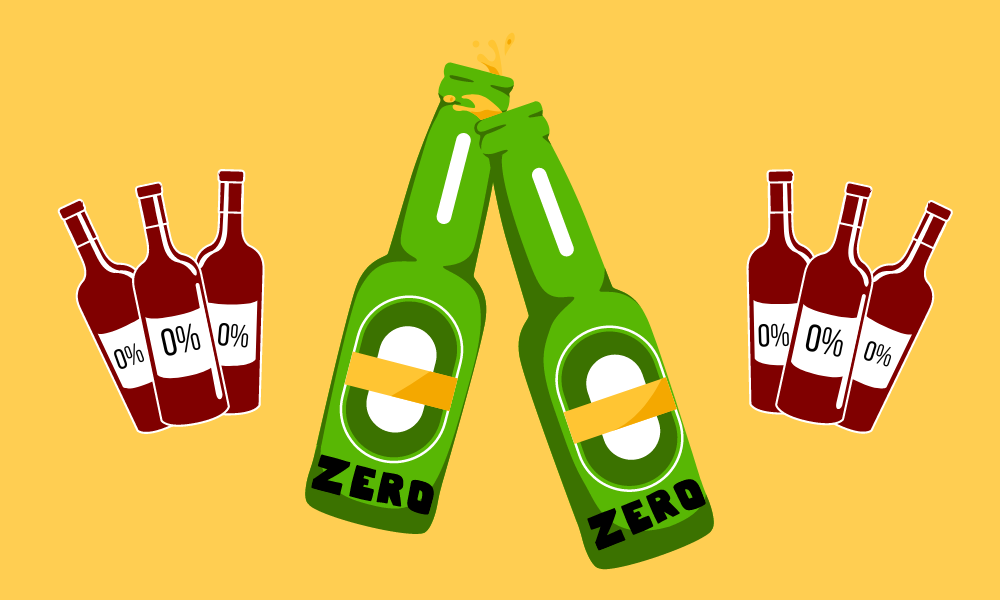
You might have noticed that there are more and more zero-alcohol drinks appearing on shelves in Australia.
Non-alcoholic beers, wines and spirits (containing <0.5% alcohol), are designed to look and taste like the alcoholic versions of the brands they are modelled on and often produced by.
Although these drinks have been available for some time overseas, the market has recently surged in Australia, and we’re increasingly seeing them for sale where alcohol has not previously been available – in supermarkets, service stations and some cafes.
A number of major cities now even have alcohol-free bars and ‘bottle shops’. Although there are a few exceptions – most of the time, anyone can buy these products in Australia.
Striking the right public health balance here is challenging.
Making zero-alcohol drinks available could be particularly useful for adults who want to cut back on drinking alcohol, or who don’t want to drink.
It can be convenient to have an inconspicuous non-alcohol option at social events.
At the same time, there’s also a risk that these drinks, or the settings in which they’re sold, could trigger people with alcohol use disorders.
The emerging evidence base on zero-alcohol drinks, as well as what we already know from studies on alcohol, warn us about some of the broader implications for children and adolescents.
Research has shown that delaying the introduction of alcohol to children can reduce the likelihood of binge drinking and alcohol-related issues later in life.
Although it’s sometimes suggested that zero-alcohol drinks might help in delaying an introduction to alcoholic drinks, others have theorised these may be ‘gateway drinks’ that accelerate young people’s interest in alcohol.
These drinks may also serve as a form of alcohol advertising in disguise, reaching new spaces and audiences, and evading alcohol marketing restrictions in the process.
We know that this situation is particularly challenging for parents.
Parents are under a lot of pressure – often facing uncomfortable decisions and tricky conversations with their teenagers around alcohol.
Our new research – published recently in the Australian and New Zealand Journal of Public Health – shows how parents now face the additional challenge of navigating zero-alcohol drinks that look, and taste, like the real thing.
In qualitative interviews, parents felt confused and conflicted on whether zero-alcohol drinks are suitable, healthy, or possibly harmful for teenagers.
As a result, around half of the parents we spoke to were concerned that these drinks could lead to their children later increasing their alcohol consumption. One parent said:
“It works like a gateway drug, you know, that they start on the zero-alcohol and they wanna try the real thing.”
Another parent talked about how supplying zero-alcohol to their teenagers might reinforce cultural norms around alcohol:
“If it’s the whole ‘being cool because you’re drinking alcohol’ sort of link, it’s almost in the same realm as being harmful, you know: it’s glorifying, it’s normalising everything about alcohol.”

Parents also voiced concerns relating to the current marketing of zero-alcohol drinks and the similarity of branding to their alcohol-containing equivalents, particularly the zero-alcohol drinks produced by major alcohol companies—especially beer brands.
Study participants described how they had received zero-alcohol drinks in public giveaways, and were concerned about the potential reach to their children, including through building alcohol brand awareness.
In our survey of more than 1100 Australian parents, most reported that they had not supplied zero-alcohol drinks to their teenagers.
A sizeable minority (two in five) were either unsure, or planning to supply these drinks at some stage before their child’s 18th birthday, though.
Parents who thought that the drinks could be beneficial for teenagers, for example by making it easier to say no to alcohol at parties, were more likely to supply zero-alcohol drinks.
However, those who thought zero-alcohol drinks might influence an adolescent to drink alcohol more regularly were less likely to plan to give them to their child.
We found that parents who had supplied alcohol to their teenagers were also more likely to supply zero-alcohol drinks, as were parents who were confused about the current NHMRC alcohol guidelines (these make it clear that those under 18 “…should not drink alcohol to reduce the risk of harm”).
Where does this leave parents?
Zero-alcohol promotions seem to be ramping up. In January, it was announced that a zero-alcohol beer would be a new global sponsor for the Olympic Games, which is a first for a beer brand.
We are concerned that the same alcohol brand logos and looks – when attached to a zero-alcohol product – can get around the regulations which aim to limit children’s exposure to alcohol products.
In turn, this promotion might increase children’s interest in alcohol and further reinforce the normalisation of drinking.
We know that zero-alcohol drinks are not intended for consumption by children.
We would like to see steps towards preventing children from accessing and consuming these products, as well as steps to limit young people’s exposure to industry advertising.
In the meantime, parental guidance in shaping healthy behaviours and decision-making is important.
Many parents want to do whatever they can to minimise harms from alcohol to their children.
For now, we advise precaution and recommend that parents steer clear of providing zero-alcohol drinks to their teenagers.
Mr Nathan Harrison is a Senior Research Officer, and Dr Ashlea Bartram is a Senior Research Fellow, both based at the National Centre for Education and Training on Addiction (NCETA) at Flinders University.
We gratefully acknowledge our co-authors, participants, and community parent advisors involved with the two studies described here. This zero-alcohol research has been funded by NHMRC GNT1157069 (to Professor Jacqueline Bowden) and produced with the financial and other support of Cancer Council SA’s Beat Cancer Project on behalf of its donors and the State Government of South Australia through the Department of Health. NCETA receives funding from the Australian Government Department of Health and Aged Care to support research regarding alcohol and other drugs.

Leave a Reply