A big part of our work at PHAA is delivering conferences which cover different public health topics, like prevention, disease control, and mental health.
Our conferences are hosted around Australia and provide a platform for public health professionals to network, collaborate, and learn from one another. We’re looking forward to our biggest event of the year, the Communicable Diseases & Immunisation Conference, which will be held next week in Brisbane.
PHAA State Branches often offer Travel Awards which enable exceptional student and early career members to attend our conferences.
Two scholarship recipients from the NSW Branch reflect on our Preventive Health Conference last month in Darwin/Larrakia Country.
Sayan Mitra
Thanks to a PHAA scholarship, I was able to attend the Preventive Health Conference for the first time. The conference addressed current pressing issues including chronic disease prevention, health promotion, and community health initiatives.
One session that left a lasting impression on me was the plenary keynote by Prof Tony Capon.
His talk on the impact of climate change on infectious and non-communicable diseases, mental health, and injuries deeply resonated.
He emphasised the need for resilient health systems and climate adaptation in sectors like water, sanitation, housing, transport, and energy.
Additionally, he highlighted the health co-benefits of mitigation actions such as renewable energy, plant-based diets, and active transport.
Prof Capon’s urgent call to action was reinforced by the already visible effects of extreme weather events on human health, especially with the backdrop of Australia’s first national health and climate strategy launched in 2023.

I attended workshops outside of my current research area, including ‘Strengthening Preventive Health through Evidence-Informed Lawmaking.’
The workshop offered invaluable insight into the crucial role of evidence in public health law-making and gave real-world examples, such as Australia’s tobacco plain packaging, and Ireland’s alcohol warning labels.
The interactive workshop activities were particularly engaging. My group was tasked with taking the viewpoint of alcohol retailers presenting to a government committee examining the evidence for alcohol warning labels.
I left with a deeper understanding of the key principles of evidence-informed public health law, and practical advice for enhancing the synergy between researchers and legal experts.
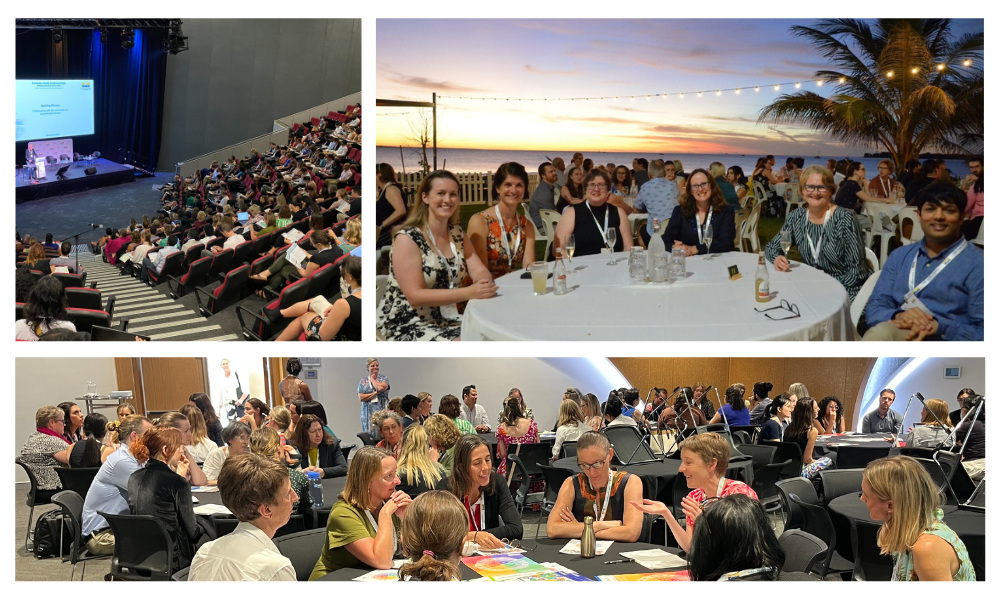
The conference also provided ample networking opportunities, such as at the conference dinner, where I coincidentally found myself seated with senior researchers from my university.
Throughout the week, I reconnected with my former tutor from my MPH days; had an engaging conversation with a professor who advises the National Tuberculosis Program in Cambodia; and learnt about Cancer Council Victoria’s innovative tobacco reduction research.
The diverse perspectives and expertise of the presenters and attendees enriched the discussions. It confirmed the necessity of interdisciplinary collaboration between public health, medicine, policy, and community services.
Tackling preventive health challenges requires a coordinated effort that integrates strategies from multiple fields to create powerful health interventions.
This conference was profoundly enlightening as to the role that preventive health plays in our communities, and I’m grateful to PHAA for awarding me a scholarship.
Dr Babatunde Balogun
I was delighted to receive the news that my application for a PHAA NSW Branch Scholarship was successful, which allowed me to attend Prevention 2024 in Darwin.
I was very enthusiastic about attending the plenary sessions, workshops, and forums to keep abreast with emerging developments and new policy insights regarding preventive health.
This was the first professional health conference that I attended where I did not submit an abstract for presentation. So, I was completely free of any worry about how my presentation would go. For those who’ve been there – this is a different experience!

The conference had a mix of practitioners, researchers, university academics in health and other fields, and I made the effort to connect with as many as I could.
I actively participated in discussions, asking questions and making contributions, sometimes as an expert but more often as a curious learner.
I soaked up every opportunity to explore topics relevant to my research interests; particularly those that included social media campaigns to promote preventive health behaviours. Such topics always help me to progress my PhD studies.
Seeking to expand my knowledge, I also joined the forums on community-based initiatives and reproductive and women’s health. These were excellent presentations that broadened my perspective about co-designing successful preventive health programmes.
We all know the proverbial impact of “all work but no play”.
So, the conference networking function hosted at the Darwin Ski Club provided an incredible setting for natters and noshes, as the sun set over the tranquil shoreline of Fannie Bay. It was an evening to interact and engage with fellow delegates, and I made the most of it.
In a stroke of luck, I was seated next to Fiona Armstrong, Adjunct Professor of Planetary Health, and founder of the Climate and Health Alliance.

A few hours earlier, I had sat in on her presentation, where she spoke passionately about how to successfully advance policy and action on a politically charged health issue. We spoke about her research journey and personal experiences, and I could not have asked for better on-the-spot mentorship.
I am grateful to PHAA NSW Branch for giving me this opportunity to learn, connect, and create memories.
There’s still time to register for the Communicable Diseases & Immunisation Conference, held in Brisbane 11-13 June. You can see our full list of conferences and events here.
Sayan Mitra is a PhD candidate in the Faculty of Medicine and Health at the University of Sydney.
Dr Babatunde Balogun is a PhD candidate at the Australian Institute of Health Service Management, University of Tasmania.
Pictured: (L to R) Opening Plenary at Prevention; delegates at the conference dinner, including author Sayan Mitra on the far right; delegates participating in a workshop.
Leave a Reply