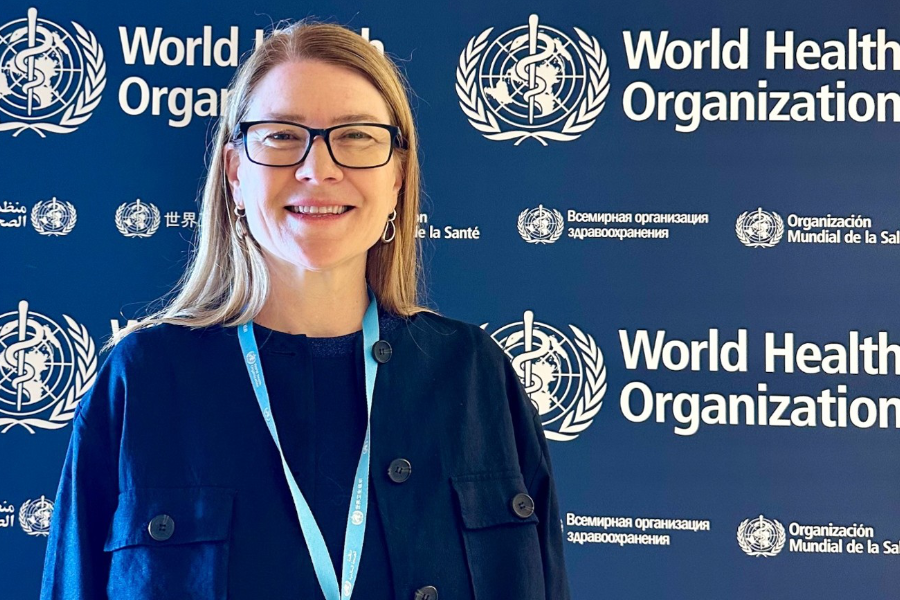
Dr Fiona Robards is a long-standing member of the Public Health Association of Australia (PHAA) and academic at the University of Sydney. She undertook a sabbatical with the World Federation of Public Health Associations (WFPHA). The PHAA is a member of the world federation.
We asked Fiona some questions to find out more about her path from local to global advocacy, and her advice to others interested in getting involved in public health policy and advocacy.
How and when did you first start working in public health?
I’ve always been drawn to the big picture — understanding how systems, environments and policies shape health. After working in health service management, I became increasingly interested in policy. That led me to do a Master of Public Health in 2008 and shift to policy roles. In 2016, I became a PHAA member, joining Special Interest Groups (SIGs) and stepping into leadership roles.
How has your career and work evolved over time?
My career has focused on improving outcomes for children and young people. I began as a psychologist and art therapist, working directly with families. I then moved into youth health, managing services for young people experiencing homelessness.
That frontline work sparked a desire to influence systems. I went on to lead a NSW youth health capacity-building organisation, which took me into policy, government and consultancy work. After completing my PhD, I transitioned into academia, where I now specialise in youth and public health.
Alongside this, for the PHAA I’ve served as Co-convenor of the Mental Health SIG (2018–2021), then Child and Youth Health SIG Co-convenor (2021–2024) and I’ve been the Child and Youth Health SIG policy lead since 2024. My goal is to lead the development or review of one policy each year, which I’ve done for ten years – since 2017. A highlight has been the involvement of young people in the policy development, which we wrote about in the Australian and New Zealand Journal of Public Health.
What has been the highlight of your career to date? Is there a policy change, or advocacy call to action that you have been involved in that you are most proud of?
A major career highlight was a four-month sabbatical in Geneva in 2025 with the World Federation of Public Health Associations (WFPHA). I attended World Health Organization Executive Board and World Health Assembly meetings, gaining invaluable insight into how global health decisions are shaped. One moment that stood out was recognising how little advocacy there was for youth health. I decided to act, making a statement at the 78th World Health Assembly on behalf of the WFPHA. It was both a challenging and rewarding experience.
You recently took up a new role with the WFPHA (World Federation of Public Health Associations). What does it involve?
In early 2026, I was invited to serve as Chair of the WFPHA Policy Committee, an exciting opportunity that aligns closely with my longstanding interest in policy and advocacy. The Policy Committee oversees the development of WFPHA policies and statements addressing complex public health issues, and supports WFPHA members in advocacy activities.

How did you get into the WFPHA role?
My pathway into the international space began with the WFPHA Women, Children and Youth Working Group, first as a member in 2022, then as Co-Chair from 2023 onwards. Through this work, I led the development of several new policies, including on children’s and young people’s health and rights. We also researched global public health policies published by Public Health Associations, finding that only eight of 130 countries (6.2%) and one regional PHA had published policies on women’s, children’s, and youth health. Since then, we have held webinars and will host a workshop at the upcoming World Congress on Public Health to build PHAs’ capacity to advocate for these groups.
In 2025, I joined the WFPHA Policy Committee, contributing to the review and development of policies, which led to my appointment as Chair this year.

What are you hoping to achieve?
I’m particularly interested in strengthening the WFPHA’s policy development processes and its voice at WHO forums. A key priority is supporting early- and mid-career professionals to engage in advocacy, whether through contributing to policy development, or taking part in forums like the World Health Assembly. Building the next generation of policy leaders is essential.
How do child and youth health challenges differ globally compared to Australia?
Globally, there are excellent technical resources to advance action on youth health – particularly from WHO – but uptake by member states can be uneven. There is also increasing resistance around issues such as gender equity and sexual and reproductive health, which requires careful and strategic engagement. In Australia, we are often able to advocate more directly on these issues, although important challenges remain.
What public health issues keep you awake at night?
Like many in public health, I’m concerned about the intersecting challenges of climate change, health equity and the commercial determinants of health. I am also particularly concerned about youth justice in Australia—an area where stronger advocacy and reform are urgently needed, particularly to raise the age of criminal responsibility and better support young people with neurodevelopmental disability and other marginalised groups.

What public health issue will be most pressing in 10 years’ time?
Alongside these ongoing challenges, artificial intelligence is emerging as a critical public health issue. While there is growing awareness, there is still a need to better understand the risks and implications. Importantly, we need to establish safeguards early to ensure AI supports, rather than undermines, health and equity.
What’s your advice for others interested in policy?
Join a PHAA SIG that aligns with your passions and contribute to policy development. Providing feedback on draft policies is a practical way to build skills and confidence. If you are interested in leadership, step forward—volunteer, contribute and take on roles. Policy is a collective effort and there is always space for new voices.
Leave a Reply