Dr Jessica Hoopes, Dr Bonny Cumming, Dr John Hunter and Prof Michelle Power
Undergraduate students from a university in northwestern Sydney are learning about human and animal health in remote and rural communities across northern and central Australia.
The Macquarie University students have been studying One Health concepts – which include collaborative elements across disciplines to maximise the health of humans, animals, and the environment – as part of their Bachelor of Medical Science course.
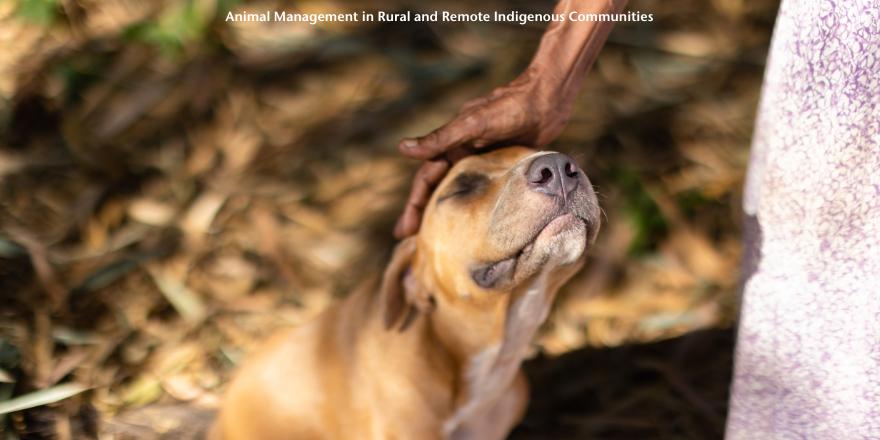
They apply their learning in real conditions through a partnership which began in 2021 with Animal Management in Rural and Remote Indigenous Communities (AMRRIC), which helps rural and remote Aboriginal and Torres Strait Islander communities across the continent.
That partnership is one of around 3,000 the university has with organisations, which facilitate students in all bachelor programs to undertake Professional and Community Engagement. Students get to develop practical experience as part of a work integrated learning program.
AMRRIC is a non-profit organisation. Its work is founded on a One Health approach, which recognises the interdependence between the health and wellbeing of people, animals, and their shared environment.
Despite increasing awareness among organisations of the importance of One Health in addressing human-animal-environmental health issues, incorporation of One Health into tertiary education is still evolving.
In 2021, the first year of the university-AMRRIC collaboration, students reviewed AMRRIC’s research policy and considered gaps in knowledge of emerging disease threats in rural and remote areas.
In 2022, and again in 2023, the projects shifted from a health research focus to a focus on community resources that support the development and application of employability skills in communication, ethical and inclusive practice, teamwork, creativity, and innovation.
During the 2022 program, students investigated one of the many zoonotic diseases that can hurt the health of people and companion animals living in rural and remote Aboriginal and Torres Strait Islander communities.
First, students were asked to identify the connections between people, companion animals and the environment in the transmission, maintenance, and prevention of these zoonotic diseases.
Next, students were tasked with translating the information into a concept map, focusing on social determinants of health and context-specific factors that may influence disease epidemiology in a remote community setting.
Finally, students were asked to apply their research through developing fact sheets and infographics to convey important information of their zoonoses in a way that was appropriate and meaningful for community members.
In tandem with the AMRRIC activities, students undertook cultural training and engaged with First Nations health professionals to learn about effective, safe, and appropriate health communication with First Nations people.

Students in the 2023 program learned about One Health in specific local settings. They also developed the outline of an animation or music training video on a parasitic zoonosis of significance for rural and remote communities. The course organiser and AMRRIC hope these will form the basis for new educational videos to complement AMRRIC’s current educational video suite.
Halfway through the project, students in the 2023 intake reported being highly engaged, and appreciative of their “work integrated learning” module.
“It has been eye-opening to see how AMRRIC adopts a One Health approach in a real-world context to promote the health and wellbeing of people, animals, and the environment in rural and remote Indigenous communities,” said Lauren Erni, a project student.
“Working in collaboration with AMRRIC has provided an exciting glimpse into what a future career in this industry could look like.”
This engagement experience has increased awareness of One Health in the next generation of public health, medical and allied health professionals.
Importantly, these future health professionals are being connected with the veterinary dimension of One Health and learning about the necessity of cross-discipline collaboration for combatting public health challenges.
Dr Jessica Hoopes and Dr Bonny Cumming work at AMRRIC. Michelle Power is a Professor in the School of Natural Sciences at Macquarie University. Dr John Hunter is an Indigenous academic within the Faculty of Medicine, Health and Human Sciences at Macquarie University.

Leave a Reply