We’re calling on the next Australian Government to take sustained steps to protect the health and wellbeing of everyone in Australia, including acting on climate change. Find out more on the Public Health Association of Australia’s 2025 Election Priorities site.
Lily Pratt
We see a future where the environment and our communities are healthy and thriving.
But this future is only possible if the Australian government acts boldly to mitigate and adapt to the effects of climate change.
The World Meteorological Organization has confirmed that 2024 was the warmest year on record and the past ten years have all seen record-breaking high temperatures.
Not only are we experiencing chronically hotter years, but also an increase of acute, severe, or unusual weather events. Northern New South Wales experiencing devastating flooding twice in three years, the summer 2019/2020 bushfires burning 19 million hectares, and the European heatwaves in 2022 and 2023 killing over 100,000 people.
Decades of Australian Government inaction on emissions reduction has caused a dual crisis for governments and communities to respond to. Not only must there be a rapid reduction on fossil fuel reliance (coal, gas and oil), but homes, health systems, public infrastructure, food systems and disaster support systems must all be appropriately adapted for the challenges of a changing climate.
Mitigation
Climate change can be mitigated by significantly and rapidly reducing greenhouse gas (GHG) emissions. But fossil fuels are currently inextricable from essential service systems within Australia, such as energy, food and goods production, construction and transport.
A ‘gas-based transition’ will not help meet emissions reductions targets. The International Energy Agency states that, to meet net zero by 2050, beyond projects already committed as of 2021, there must be no new oil and gas fields or coal mine extensions.
Nuclear power to reduce fossil fuel emissions is also a dud plan for Australia. Through mining, transport, building, processing, decommissioning, and waste processing – nuclear power creates three times more GHG than solar systems, and 28 times more than wind systems, to create the same amount of energy.
There are cheaper and cleaner options to replace fossil fuels for energy production. There are also policies that governments could support that would help Australians to rely less on fossil fuels and fossil fuel products – like improving active transport infrastructure or ensuring that foods that produce less GHG, like fruit and vegetables, are available and affordable for all.
Ensuring a just and equitable transition is an essential part of our strategy to reduce GHG. We need to help communities move away from their local economies based around fossil fuel extraction. Change is a challenge, but with support from government and the wider community, the change can be a positive process, rather than one that generates fear and anxiety.
Adaptation
Climate change adaptation must be actioned together with mitigation. The recent disaster events and heatwaves in Australia demonstrate that there are very few facets of our lives and environments that won’t be impacted by climate change.
Inability to access health providers, loss of key infrastructure including homes, schools and community centres, and loss of economic stability are just some of the outcomes from disasters that not only impact people’s physical health, but also their mental health and wellbeing long after the cleanup efforts are completed.
The Government has released the National Climate and Health Strategy (2023) and is undergoing the second pass of National Climate Risk Assessment, which will inform climate adaptation plans, such as the National Health Adaptation Plan, National Heat-Health Action Plan and the National Adaptation Plan.
We support the development of these national strategies and plans, but call for governments to start key actions now, without delay.
Key actions include establishing governance, including a national Ministerial Committee on Health and Climate Change to facilitate cooperative leadership across portfolios and levels of government, and to give the Australian Centre for Disease Control a well-resourced mission to educate and expand the national public health workforce. This includes enhancing the capabilities of environmental health practitioners and workers, who will be critical to climate adaptation and response particularly at the local level.
Ahead of the federal election, we are pressing all contesting parties and candidates to commit to bold climate action. We are calling for the next government to implement emissions reduction policies to meet, if not exceed Australia’s agreed national and international commitments, specifically to reach net zero by 2050, if not earlier.
This action is vital to protect the health and livelihoods of everyone in Australia – and generations to come.
Lily Pratt is PHAA’s Policy Officer.
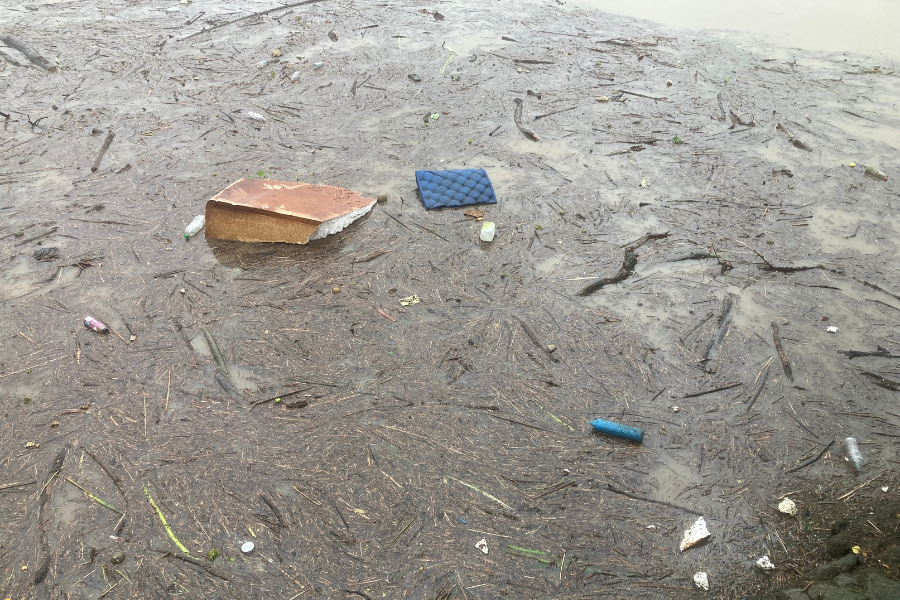
Image: the Brisbane River during Cyclone Alfred, by Lily Pratt

Leave a Reply