Peter Tait
The current conflict or war between Israel and other states in western Asia is deeply distressing on so many fronts. One factor that has become obvious internationally and in Australia is that criticism of the behaviour of the Israeli Government and the Israeli Defence Force is being wrongly conflated with accusations of anti-semitism.
This is a barrier to respectful and informed dialogue about the situation and how organisations such as the PHAA can contribute. In fact, it deflects conversation away from the core issues – what is happening and what needs to be done.
The basis for my interest and action stems from the Special Resolution on Gaza passed at the Public Health Association’s 2025 AGM. The Special Resolution rose from the values and core tenets of public health which are about promoting and protecting health, improving lives, reducing suffering and ensuring access to care.
Realistically our focus needs to be on what the Australian Government is doing in relation to the Palestine conflict, as well as supporting other NGOs in the international sphere, to help address the public health and humanitarian emergency happening in the western Asia.
For context, I am aghast at, and strongly condemn, all violence occurring in the Middle East regardless of who the perpetrators of violence are and their rationale for using violence.
At the same time, I condemn all overt, covert, direct or indirect violence used at any time in any place against any people or group especially when based on their ethnic or religious background, anywhere in the world. This includes behaviour that might be labelled as racist.
I recognise that long term management of the decades-long conflict between Israel and Palestine will require good faith, diplomatic negotiation between all parties.
The terms Zionism, anti-Zionism and anti-semitism have long, complex historical routes. I aim to be sensitive to and call out the conflation of anti-semitism with anti-Zionism and criticism of the nation state of Israel. In this context I call for specificity in the use of these terms where they can usefully contribute to the conversation.
In particular we should reject the notion that criticism of the state of Israel and the actions of its government is in any way criticism of or antagonism toward Jewish people and the religion Judaism in the same way, for instance, that criticism of any country does not equate to discrimination against its citizens or different ethnic or religious groups.
Conversations about racism and injustices often make some people feel uncomfortable, especially when they do not understand or agree that there is racism or injustice occurring. Understanding racism in all its forms is essential for addressing inequities and fostering a more just and inclusive society.
This does not mean, however, that hard discussions about racism and anti-racism should be avoided. Only by careful use of language can we have open, respectful, safe and inclusive discussions to guide ongoing decision-making related to implementing the PHAA Special Resolution on Gaza.
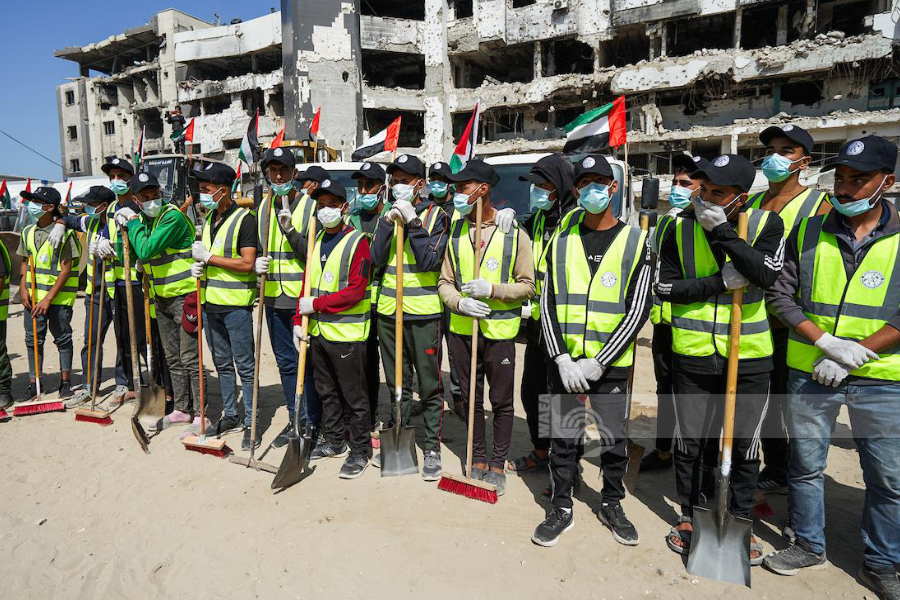
Image: Volunteers cleap up debris at Al-Shifa Hospital in Gaza City, Palestine. Photo by Palestine News and Information Service / WAFA News Agency.
Dr Peter Tait is a PHAA member, a general practitioner based in Canberra / Ngunnawal and Ngambri Country, and an Honorary Clinical Senior Lecturer at the ANU School of Medicine and Psychology.

Leave a Reply