We recently launched our election priorities platform, Vote for Public Health. We’re calling on the next Australian Government to take action to prevent disease and ill-health in our community, including by making oral healthcare universal through Medicare. Find out more here.
A version of this article was originally published by Croakey Health Media.
Shariq Ali Khan
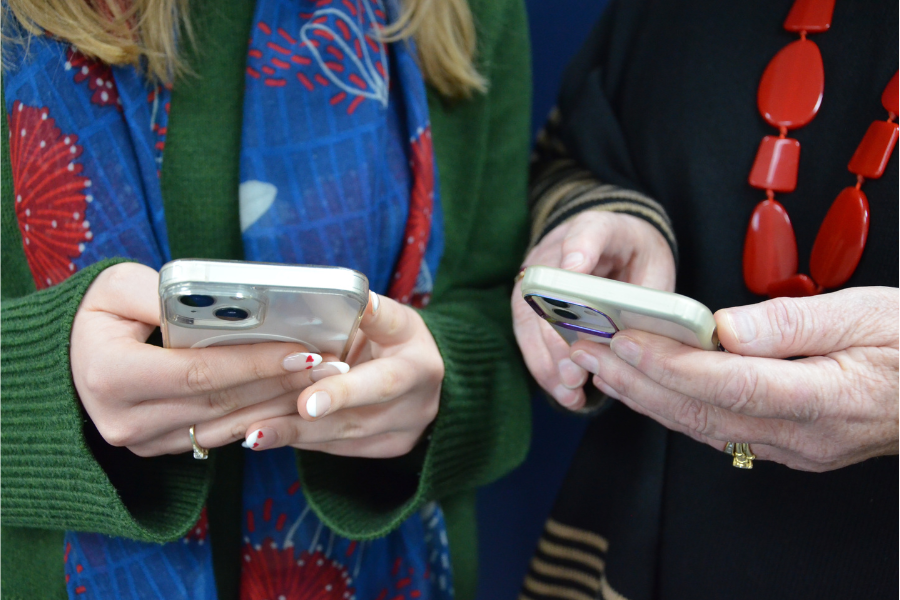
A simple but comprehensive ‘mobile application’ that includes easy, authentic and reliable access to dentists and dental specialists, and provides real-time relevant information for improving oral hygiene, could create a positive impact for the dental needs of priority populations.
With many Australians experiencing poor oral health, multi-faceted mobile technologies such as this have the potential to improve access to oral healthcare.
Many smartphone applications have been created globally and in Australia to help people manage their oral healthcare.
However, there is still a gap for oral health promotion and accessibility apps for priority populations, including people living in rural and remote areas, Aboriginal and Torres Strait Islander people, new migrants from different cultural backgrounds, refugees, women and children experiencing domestic violence, people with disability or with special needs, and older people.
Priority populations face significant barriers in receiving dental care for many reasons including affordability, access, and knowledge of available services. A mobile app is one tool or solution that may help, but complex and wider issues also need addressing.
The Australian Department of Health and Aged Care published in July last year its response to Senate Select Committee’s report regarding the provision and access to Dental Services in Australia. The report called dental services “a system in decay” and proposed 35 recommendations.
These include an emphasis on expanding coverage of the Child Dental Benefit Scheme (CDBS) (number 22), universal dental coverage under Medicare or similar scheme (number 35), and a suggestion for seed funding to be provided for a national oral health promotion and advocacy body (number 10).
A mobile application for oral healthcare aligns with the above-mentioned recommendations from the Senate Inquiry, as it offers a pathway for improving access to CDBS, overall dental healthcare and oral health promotion interventions. The digital nature of the app will be able to provide real-time feedback and data to improve the oral health delivery system on the go.
Improving affordability
In Australia, affordability is the major barrier for people visiting the dentist regularly, for which a public-funded Child Dental Benefit Scheme (CDBS) scheme runs under Medicare to provide dental services to all children under 18 years of age.
Last year, Tan Nguyen, oral health therapist and PhD Candidate at Monash Public Health and Preventive Medicine, and Dr Sneha Sethi, dentist and research fellow from the Indigenous Oral Health Unit, Australian Research Centre for Population Oral Health at The University of Adelaide, called on the Federal Government to fund Medicare like the Child Dental Benefit Scheme to include the adult population as well.
They proposed a cost estimate including the entire population to be around $6.1-9.2 billion in 2025, that would grow to $7.6-11.3 billion by 2030.
‘Dental for schools’ programs provide checkups for children at schools, and many other non-profit organisations work to improve the oral health of Australian population. While there are many public dental clinics across the country providing subsidised or free emergency dental services to the eligible patients, waitlists can be long in many cases.
In addition, tele-dentistry has been used in the context of schools and rural communities, and some organisations provide this service to the general public too.
Mobile applications in dentistry
An accessible mobile app could overcome some of the barriers to accessing affordable oral healthcare. Versions of digital technology in oral health have been used in Australia and internationally.
For example, Australian e-Health Research Centre (AEHRC) developed a mobile app and a web-portal in 2019 to 2021 as a research project with Queensland Government to collect dental images of oral cavities of school children. Trained teachers can upload images of children’s teeth through a smartphone, and the images can be accessed by dental experts to screen for dental caries and other problems.
They predicted that the cost of setting up and running the app and portal is $1 million and if staff are hired along with other expenses – then the cost would go up to $50 million.
This is compared with $135-241 million for conventional screening in school dental programs. However, at present it has had limited adaptability as a research project, and hasn’t been able to replace the conventional mobile dental screening program across Australia.
A scoping review by Dr Maurizio Pascadopoli from University of Pavia and colleagues, identified some major uses of mobile applications in dentistry globally which include:
- helping children or older people manage oral hygiene
- helping dentists manage patients’ records and suggesting treatment options using AI
- supporting tele-dentistry and sharing images of patients’ records.
Globally, tele-dentistry has been developing as a trend especially in the last few years. It has been used in the fields of oral medicine, supporting diagnostic capabilities of dentists, and outreach dental consultation to remote and difficult to access areas.
Tele-dentistry mostly refers to an online or videoconferencing between a dentist and the patient. It offers limited contact with a dentist suggesting a possible diagnosis and treatment plan, as well as prescribing suitable medications.
Call to action
A mobile app for dentistry could be executed by the National Health and Medical Research Council (NHMRC) and Australian Government Department of Health and Aged Care. The Australian Government should include the utilisation of digital tools to enhance the accessibility of dental services in the ‘National Oral Health Plan for 2025-2036’.
I recommend that the NHMRC and Department of Health and Aged Care partner with state-wise chapters of the Australian Dental Association to recruit dentists, oral health therapists, specialists and other dental professionals for the project. All oral health-related organisations, support groups, non-profit organisations and stakeholders should advocate and work collectively to make this mobile app a universal utility for the Australian population.
In addition to supporting the use of digital technologies such as the proposed application to improve oral healthcare in Australia, the Department of Health and Aged Care should fund Medicare under the recommendations of the Senate Select Committee’s report to cover dental treatments for all Australians.
Shariq Ali Khan is a PhD candidate in Public Health and Sessional Lecturer at Federation University Australia. He is also an active member of the Child and Youth Health, Health Promotion and Oral Health Special Interest Groups (SIGs) at PHAA.

Leave a Reply