Stephanie Godrich, Rebecca Lindberg, Kate Wingrove, and Cherie Russell
Australia’s national food system is fragile. Climate disasters and the COVID-19 pandemic show how quickly crises or disasters result in people being unable to find food. This is particularly true for those in regional and rural areas. Our national food system is ripe for change.
The upcoming ‘Feeding Australia’ National Food Security Strategy could provide a timely and much-needed roadmap to improve food security; ensuring all Australians are able to get affordable, healthy and culturally appropriate food.
Inequitably distributed food
While Australia produces and exports enough food for three times our population, it is not available for everyone. Regional and rural communities suffer the most. Fresh fruit and vegetables are often harder to find in these areas. They are more expensive and of poorer quality, compared to urban areas.
Our research shows that there are multiple, systemic issues across the food supply chain hindering regional and rural residents. For example, producers face complex ‘red tape’, insufficient regional food processing facilities, limited food distribution options for small producers, limited knowledge about nutrition and preparation, poor recycling options in regional areas, and social isolation. Consequently, most regional communities eat less fruit, are less likely to report ‘very good’ or ‘excellent’ health and have higher chronic disease rates.
Australians going without food
Australia’s unstable food system has contributed to an increase in food insecurity.
In 2024 alone, Foodbank Australia estimated that 37% of regional households had irregular and unreliable availability of and access to food. Food insecurity was highest in Western Australia (47% compared to 35% in South Australia) and is increasing in Queensland, Western Australia, and Tasmania. The increasing cost-of-living is still the leading cause for food insecurity for over eight in 10 Australian households.
Promising policy change
Establishing the National Food Security Strategy is the first recommendation to be implemented from the 2023 federal parliamentary inquiry into food security. However, Australian policymakers should seize the opportunity now. They should use the Strategy to enact other recommendations, such as strengthening local initiatives that support food supply and distribution networks, and community awareness on affordable, accessible, and nutritious food. These initiatives would benefit regional and rural communities, and public institutions alike.
Taking matters into their hands
Local food system initiatives – including community supported agriculture that connects farmers and eaters, food boxes, food hubs, and food action groups (often termed food policy groups that address food issues) – help improve equity and health. They also mitigate environmental and economic burdens on communities. These initiatives have been successful in countries like Canada, UK, USA, and Belgium, improving food quality, dietary diversity, social connectedness, and local economies. They also foster community agency in food systems while mitigating climate change harms. Further, small and medium enterprises create an environment where diverse food systems lift resilience. Leading Australian examples include The Community Plate, Common Ground, and Box Divvy. We need to evaluate and support community-led, local food system initiatives to ensure that rural and regional communities have healthy, affordable and high-quality food.
Taking local food initiatives to the mainstream
Successful local food system initiatives need to be highlighted and adopted in larger scale to improve human and planetary health. This requires investment, coordination and support through:
- Local governments which are critical partners and coordinators.
- Being the closest level of government to the community and having a wide scope for action, local governments need to support the social, economic and environmental needs of communities as they are more able to understand community-led, local food initiatives.
- Local, state, and national coordination.
- Through their legislated public health and wellbeing plans (e.g. in Western Australia, Victoria), local governments are responsible in addressing community food insecurities. They have the authority to ensure resourcing and sustainability of food initiatives.
- Health promotion strategic frameworks or Healthy Eating Strategies of state governments (e.g. Western Australia, New South Wales) can include improving food availability, and advocate for local food system initiatives.
- Regional and rural communities and policymakers should support setting up food action groups, bringing together government and non-government groups to take charge of local food systems.
- The National Food Security Strategy is an opportunity to include local food system initiatives.
- Incorporating local food system initiatives into social programs, and public institutions.
- Regional and rural communities want to buy regionally grown, fresh produce from supermarkets, local farmers, or social enterprises.
- Making sure that food is available in a sustainable manner means positive social, economic, and environmental results. For example, local governments, childcare centres, schools, hospitals, prisons, and aged care facilities can develop policies to make sure the patients/residents they support get locally grown, healthy, and more sustainable food.
- Ensuring long-term funding.
- Systems change can take five to nine years to see life changing results. It is important to be aware of this and ensure long-term funding. Incorporating local food system initiatives into all levels of government policy will support community-led programs to truly feed Australia.
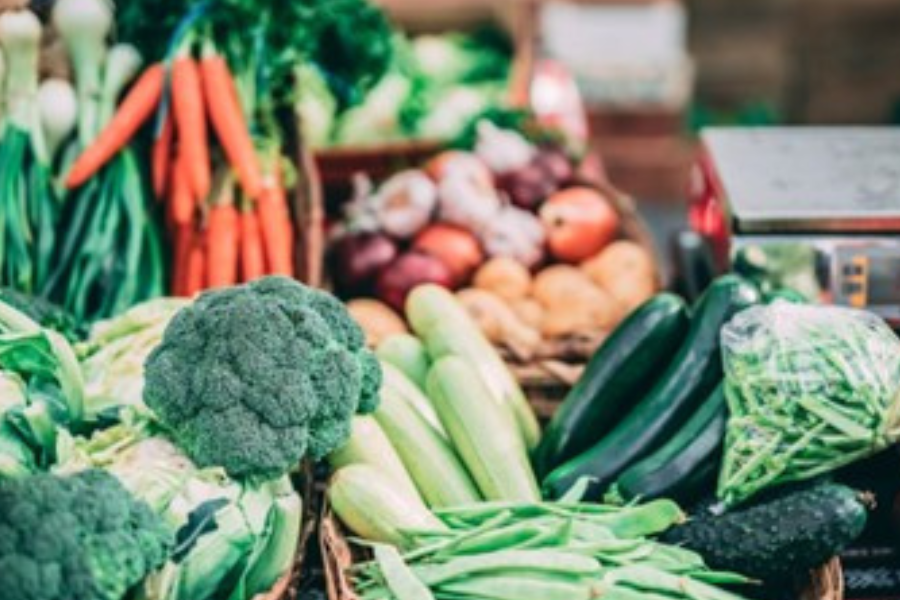
Image: Inigo de la Maza, Unsplash
Stephanie Godrich is a PHAA member and Food and Nutrition SIG member. She is a Senior Lecturer of Public Health (Nutrition) at the School of Medical and Health Sciences, Edith Cowan University, WA.
Kate Wingrove is a PHAA member and Food and Nutrition SIG member. She is a Research Fellow at Deakin University’s School of Exercise and Nutrition Sciences.
Rebecca Lindberg is a PHAA member. She is a Senior Lecturer, in the Faculty of Health/School of Exercise and Nutrition Sciences/Institute for Physical Activity and Nutrition.
Cherie Russell is a PHAA member and Executive Dean of Health Post-Doctoral Research Fellow, in Deakin University’s Faculty of Health/School of Medicine/Institute for Health Transformation.
Leave a Reply