Tan Nguyen and Sneha Sethi
Successive Australian governments have struggled to address the funding gap to include oral health under Medicare.
The burden of oral diseases in Australia amounts to 120,799 disability-adjusted life years for the 2023 population’s lifetime – which equates to $10.8 trillion in productivity losses.
Among the many personal costs of oral health inaction are avoidable toothaches and high rates of hospital admissions due to dental conditions.
With universal access to essential oral healthcare under Medicare, these problems could be prevented, or at least minimised, for millions of Australians.
Many voices have called to include oral health care within the Medicare system.
The 2023 Senate Select Committee on Access and Provision of Dental Services in Australia recommends that:
“… the Australian Government works with the states and territories to achieve universal access to dental and oral health care, which expands coverage under Medicare or a similar scheme for essential oral health care, over time, in stages.”
Previous modelling on a universal dental scheme by the Grattan Institute found the scheme’s estimated cost to be $7.6 billion annually (in 2023), though this lacks nuance.
We propose that Commonwealth subsidies for dental services for eligible people be implemented from 2025, initially covering all Australian children through the Child Dental Benefits Schedule, and an income-tested Adult Dental Benefits Schedule. This would not only reduce the economic burden of oral diseases but improve public health and wellbeing.
Population coverage would first target priority populations identified in Australia’s National Oral Health Plan 2025-2024 and be expanded by 2030 to provide full population coverage.
Expansion of the Child Dental Benefits Schedule
The Child Dental Benefits Schedule currently covers around 46.1% of the Australian child population aged 0-17 years.
Expansion of the Child Dental Benefits Schedule would mean 3.1 million more children would have equal access to publicly subsidised dental services.
It is estimated that the uptake of the expanded Child Dental Benefits Scheme would begin at 65% and increase by 5% annually to reach 80% by 2030.
We modelled in Scenario 1 that Australian children, on average, utilised 50% of their dental benefits cap, and Scenario 2 modelled an increased to 75% of the dental benefits cap, per two-year period.

Dental services for all children can prevent lifetime anxiety from dental treatment (caused by, for example, a painful tooth extraction) and establish foundational oral hygiene habits that will protect children’s oral health into the future.
Income-tested Adult Dental Benefits Scheme
We propose the income-tested Adult Dental Benefits Schedule to cover adults whose personal income is less than $1,500 per week (i.e. income threshold above the poverty line).
This is approximately 15.1 million Australians being eligible for the income-tested Adult Dental Benefits Schedule and would help to close the gender and age equity gap in oral healthcare.

We applied the same modelling assumptions as the Child Dental Benefits Schedule, though the oral health needs of the adult population are different to children.
Therefore, we doubled the dental benefits cap applied to the Child Dental Benefits Schedule to $2,104 over a two-year period.

The income-tested Adult Dental Benefits Scheme would immediately address the financial barriers that cause many Australians to forego dental services.
Other considerations
The permitted list of dental services can be determined by the Department of Health and Aged Care – Dental Clinical Advisory Committee. The Workforce Incentive Program Doctor Stream should be considered for oral healthcare access in rural and remote areas.
To mitigate risks of fraudulent claims, an audit system should be implemented. This draws on learnings from the previously ceased Chronic Disease Dental Scheme.
Dental service providers should be mandated to gather diagnostic information such as clinical photography and dental radiographs. They should be linked with MyMedicare to monitor health outcomes and enable real-time oral disease surveillance.
Sustainability
When combining both the expanded Child Dental Benefits Scheme and the income-tested Adult Dental Benefits Schedule, population coverage for Commonwealth publicly funded dental services would be guaranteed to 80.3% of the Australian population.
Over a four-year forecast, the cost would be $6.1-9.2B annually from 2025, increasing to $7.6-11.3B by 2030.
To improve the effectiveness and sustainability of universal access to essential oral healthcare, a government commissioned Medicare Taskforce on Essential Oral Healthcare should be established.
This taskforce would undertake an oral health priority-setting approach and apply the health technology assessment framework used by the Medical Services Advisory Committee.
Publicly funded dental services should be focused on oral disease prevention, reviewed for their cost-effectiveness, and consider utilising non-dental health professionals in providing preventive dental services.
Recommendations from the Review of General Practice Incentives may also inform how dental practices can be better integrated into the primary health care system.
In the longer term, the Medical Services Advisory Committee would make evidence-informed recommendations for dental services to be listed under the Medical Benefits Schedule, thereby phasing out the Child Dental Benefits Schedule and the Adult Dental Benefits Schedule.
These changes would bring oral health in line with other medical services in Australia.
Oral health is not a luxury good or a sole personal responsibility – the Australian Government needs to treat the mouth, teeth and gums like the rest of the body.
Tan Nguyen is an oral health therapist and health economist. He is co-convenor of the Oral Health Special Interest Group at PHAA, and is affiliated with Deakin Health Economics, Monash University Health Economics Group, and Dental Health Services Victoria.
Dr Sneha Sethi is a dentist and research fellow from the Indigenous Oral Health Unit, Australian Research Centre for Population Oral Health at The University of Adelaide, and is co-convenor of the Oral Health Special Interest Group at PHAA.
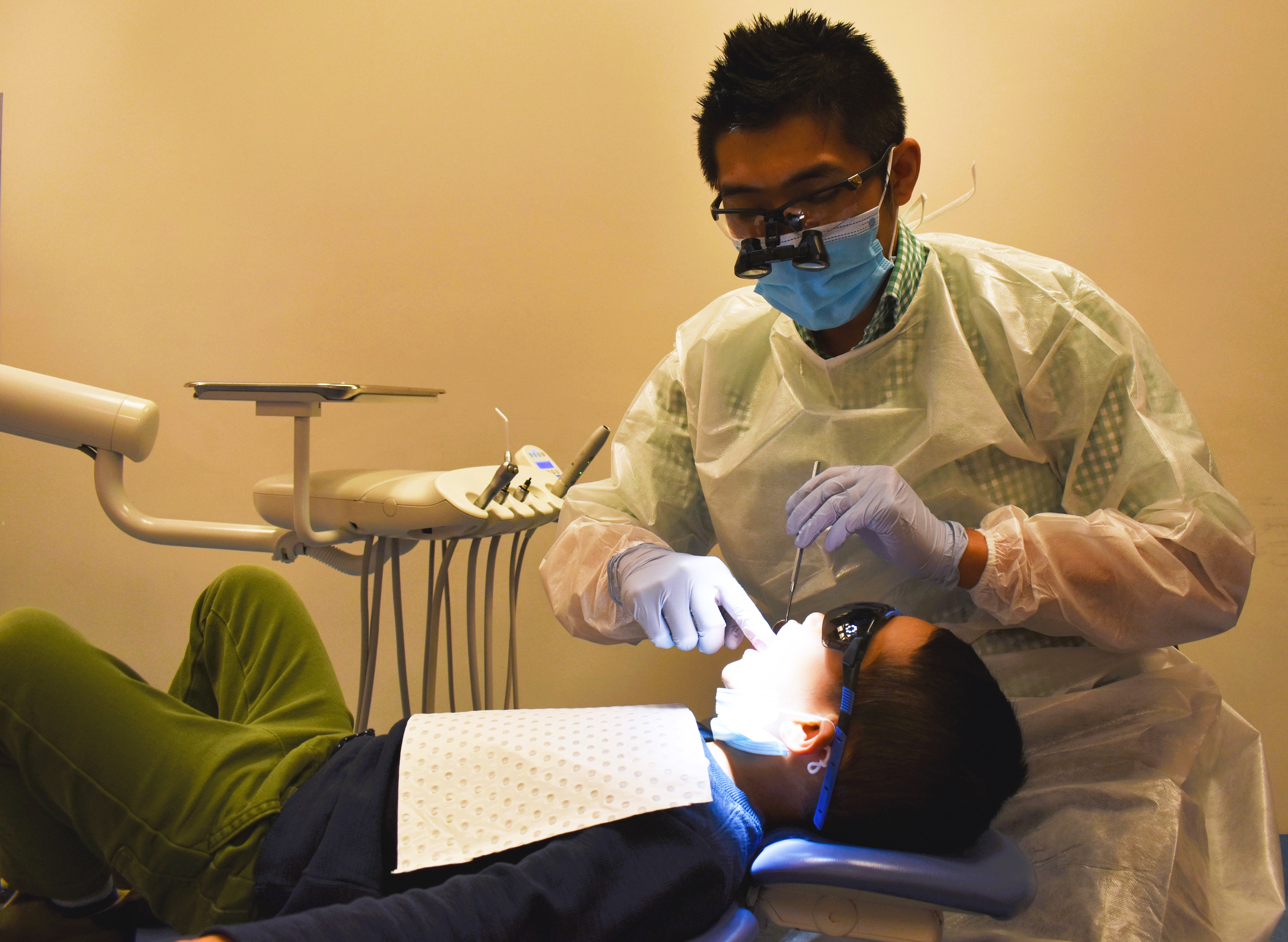
Pictured: Tan Nguyen and his son / Supplied

Leave a Reply