Leanne Coombe and Hope de Rooy-Underhill
The World Health Organization (WHO) said that the world’s response to the COVID-19 pandemic represented a “catastrophic failure of the international community in showing solidarity and equity.”
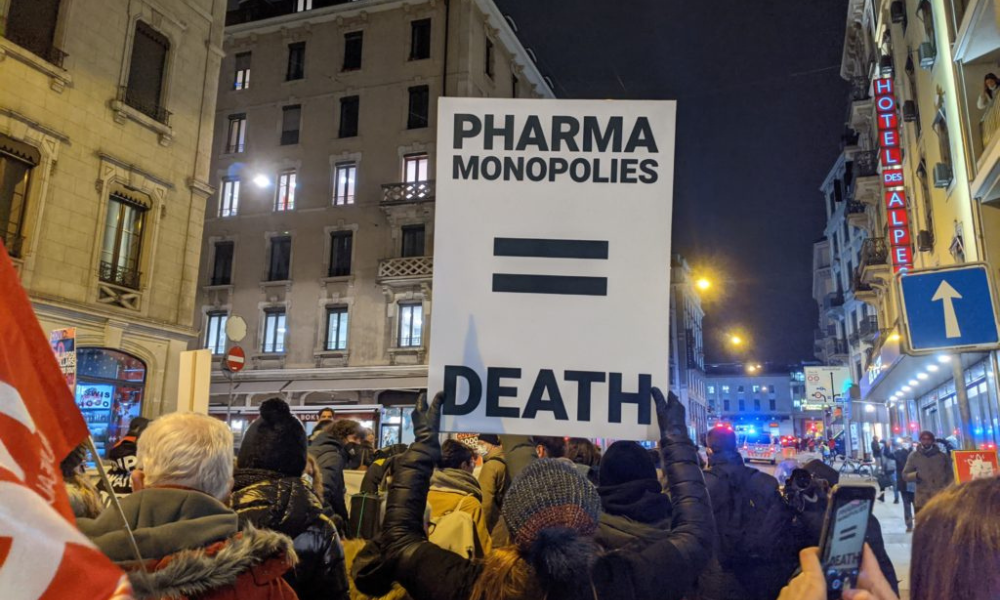
Pharmaceutical companies, supported by high-income countries seeking to be first in the vaccine queue, fought to protect intellectual property rules – preventing greater production of vaccines, treatments, and diagnostic tests – leading to millions of preventable deaths, particularly in the Global South.
Now countries are negotiating a Pandemic Agreement, aimed at avoiding the mistakes of the COVID pandemic and building “a more robust international health architecture that will protect future generations.”
However, there are real concerns that dwindling political momentum will result in a watered-down agreement, or no agreement at all, which WHO director-general Tedros Adhanom Ghebreyesus said would be a “missed opportunity for which future generations may not forgive us.”
Ensuring equitable access to medicines in future pandemics must remain the central tenant of the agreement.
The May target to finalise the agreement is fast-approaching, and there are a number of key areas where impactful steps could be taken to ensure the final Pandemic Agreement is robust and prioritises the equitable distribution of life-saving products.
Access and Benefit Sharing (ABS)
Access and Benefit Sharing (ABS) is one of the most contentious issues of the Pandemic Agreement, but also one of the most promising areas for compromise.
Countries are asked to share data on emerging pathogens and genomic sequencing, which is crucial in developing vaccines, in return for shared benefits arising from this data.
While data was widely shared during the COVID pandemic, the benefits were not.
Now, lower-income countries are concerned that they will have more sharing requirements but will still not get access to the vaccines and drugs produced.
However, the inclusion of provisions which ensure access to pandemic products, technology sharing, and capacity building in return for shared data, would be win-win for both sides of the debate.
Another highly contended topic is making public funding for pandemic research and development conditional on equitably sharing the resulting pandemic products.
The US, one of the largest funders, has been strongly opposed to this – in part because of its powerful pharmaceutical lobby.
Elsewhere, there has been strong support for this proposal and there is potential for stronger provisions that would ensure public funding goes toward equitable access to life-saving medicines, rather than the already large profit margins of pharmaceutical companies.
Intellectual Property (IP)
There has been a fraught and long-standing debate about whether to include provisions in the Pandemic Agreement which would temporarily waive some IP rules during global health emergencies; allowing affordable, generic versions of pandemic products to be produced.
However, extreme opposition from some higher-income countries, mostly those with strong pharmaceutical industries, mean those provisions are unlikely to make it into the agreement.
Instead, focus has shifted to recognising IP flexibilities, which allow patented products to be produced without the permission of the patent holder to protect public health.
These flexibilities proved unworkable during the COVID pandemic, partly because of pressure from pharmaceutical companies. But strong language in the Pandemic Agreement, which recognises the importance of IP flexibilities and normalises their use, create a vital pathway for pandemic products to reach low-income countries during a global health emergency.
Pandemic response and prevention: a security issue
There is a long-standing precedent that when it comes to issues of national security, such as defence, countries are entitled to do what is needed to manage the security risk.
Pandemics are, arguably, one of the most serious national security threats, but countries are not given the same policy space to respond to global health emergencies.
Language in the Pandemic Agreement that stresses that in health emergencies, such as a pandemic, governments can and should do what is needed to manage the security risk could be crucial in shifting public health norms and ensuring this issue is given precedence.
Technology transfer
During the COVID pandemic, global development and manufacturing for pandemic products was highly concentrated in the Global North, which was one of the major factors in the inequitable distribution of COVID products.
Strong provisions in the Pandemic Agreement on technology transfer would help create greater global capacity, so that countries can manufacture their own drugs and vaccines.
This involves more than just sharing the technology itself – it also requires sharing know-how which cannot be mandated, but must be willingly given by industry.
However, including language that normalises sharing technology and knowledge, and establishes best practice, could be highly influential.
Australia’s role in negotiations
So far, Australia has positioned itself as an “honest broker” in Pandemic Agreement negotiations, but its support on these key areas could crucially shift the debate.
For example, Australia is the co-facilitator of the Working Group on ABS, and its support for strong access provisions could be instrumental in influencing other countries.
The outcome of the Pandemic Agreement currently hangs in the balance. Whether it becomes diluted and unsubstantial, or an agreement based on a foundation of collaboration and equity, remains to be seen.
Australia must seize the opportunity to be a vital force in tipping the agreement towards strong, equitable provisions that protect the health of future generations.
Join us on 9 April at 7:00 PM AEST for a Global Public Health Week Webinar on overcoming intellectual property barriers to equitable medicines access for pandemics, co-hosted by PHAA and AFTINET.
Register now to receive the webinar link.
Leanne Coombe is the Policy and Advocacy Manager at Public Health Australia. Hope de Rooy-Underhill is Trade Justice Coordinator at Australian Fair Trade and Investment Network.
Image: Supplied AFTINET
Leave a Reply