Rachel Laws, Penny Love, Megan Adam, and Kylie Hesketh
Anyone who has endured a high chair standoff over food, or battled nap time with an exhausted child, will know that raising a baby is not for the faint hearted.
The first 1,000 days, from conception to two years, are critical. During these early years, habits are formed around nutrition, active play, screen use and sleep, which not only influence growth and development, but set the foundation for lifelong health.
These behaviours are shaped by culture, socioeconomic factors and the environments we live in. Differences in children’s diet, physical activity and screen time begin early and become more pronounced over time. That is why equitable access to support in the early years is essential.
Parents get conflicting messages
Pregnancy and early parenthood are unique times when families seek support. There is frequent contact with health and early years services. Yet, in a world overflowing with information, many parents feel overwhelmed by conflicting messages, from family and friends, social media, and even health professionals.
At times, health professionals lack confidence to discuss challenges parents face, and in some instances, do not receive consistent training. This leaves parents without clear, evidence-based guidance.
Turning research into everyday support
INFANT (INfant Feeding, Active play and NuTrition) is an evidence-based program that aims to support parents with healthy eating, active play and reduced screen time from the start of a baby’s life.
Based on over 15 years of research, INFANT offers group sessions with a companion app to provide practical, evidence-based advice. Group sessions encourage learning from each other and social connection, because sometimes, the best support comes from those experiencing similar challenges.
This first-time parent explained: [What I liked most was] “hearing from the experts, seeking reassurance and sharing successes and learnings with other parents. Great to walkaway with the app for support. It can be a lot to take in [otherwise]!”
Health professionals also value the program. INFANT training ensures they have up-to-date knowledge and best practice, making it easier to provide consistent, evidence-based guidance.
One professional explained: “The program also makes it easy for us as health professionals to provide the right guidance for parents, backed up by evidence. The app is also a really useful tool.”
Over 1,500 health and early years professionals have been trained to deliver INFANT. Training has transformed practice. Before and after training surveys show that those who complete the training feel more confident talking about INFANT’s key messages with families. They are more likely to comfortably discuss topics like active play, reducing screen time and the importance of family meals. These conversations help to provide consistent information to parents, and help families feel confident and supported when building healthy habits in their children.
Expanding INFANT and closing the gaps
INFANT is now being used across Victoria and has reached over 18,000 families so far. It is a great example of research achieving impact, thanks to years of collaboration with practice and policy partners, and a shared commitment to supporting families during those earliest, most critical years.
Our study, evaluating the program’s uptake across Victoria and how well it has reached priority population groups, is published in the Australian and New Zealand Journal of Public Health. The findings show strong progress, with nearly all Victorian local government areas now offering the INFANT app, and more than half providing group sessions. Areas with more trained facilitators see better reach, and regional participation has been strong.
However, challenges remain. More disadvantaged families, those speaking languages other than English, and fathers are less likely to participate, according to findings. INFANT is addressing these gaps by developing different ways to better meet the needs of diverse families. This is in collaboration with community partners including local public health units, bi-cultural workers and Aboriginal Community Controlled Health Organisations.
Initiatives include flexible session times and online groups to increase fathers’ involvement, translated resources, and adopting different ways to meet the needs of Aboriginal families. These efforts aim to improve cultural safety and ensure every family can find support that meets their needs.
Changing the system
INFANT is not about just helping families – it is changing the way we look at early childhood health across Victoria and beyond. INFANT is a priority in the Victorian Government’s Healthy Kids Healthy Futures plan. Nationally, it is recommended as an evidence-based program for communities, funded through the Commonwealth Community for Children initiative. Internationally, INFANT has been recognised by leading organisations, including the US National Cancer Institute and the US Centers for Disease Control, as one of the strongest programs for infant nutrition that puts research into practice.
INFANT has already changed lives and supported communities, proving that evidence-based solutions work. However, further investment is needed to reach the thousands more families who need it most.
Researchers at Deakin University’s Institute for Physical Activity and Nutrition are now working with partners to find ways of expanding INFANT and its benefits, and embed workforce training nationwide, reducing health inequities, improve people’s wellbeing, and deliver long-term savings for our health system.
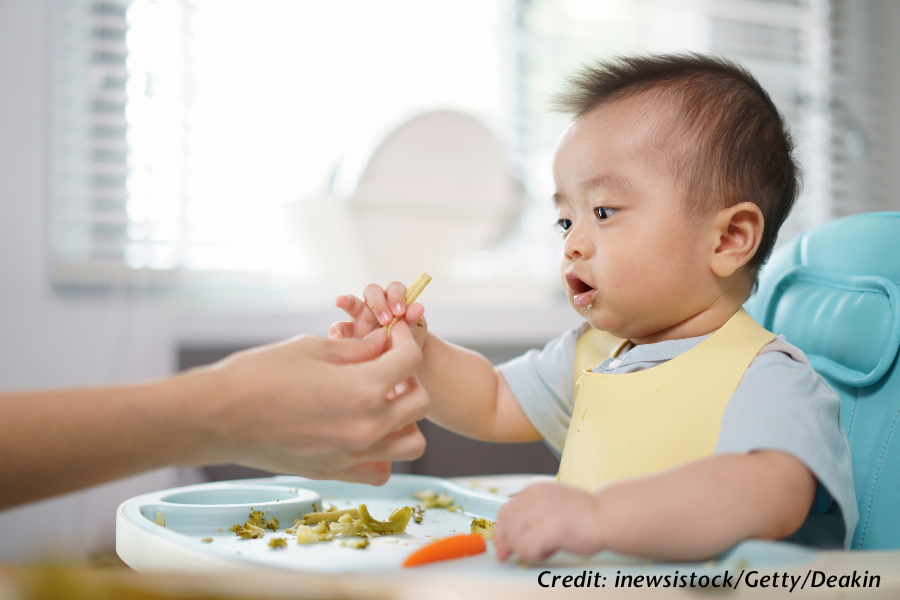
Image credit: inewsistock/Getty/Deakin
A/Prof Rachel Laws (lead researcher and PHAA member), Dr Penny Love, Prof Kylie Hesketh, and Dr Megan Adam are from the Institute for Physical Activity and Nutrition, School of Exercise and Nutrition Science, Deakin University. The first three authors are also part of the NHMRC Centre of Research Excellence in the Early Prevention of Obesity in Childhood-Translate.
Leave a Reply