PHAA Political Economy of Health Special Interest Group
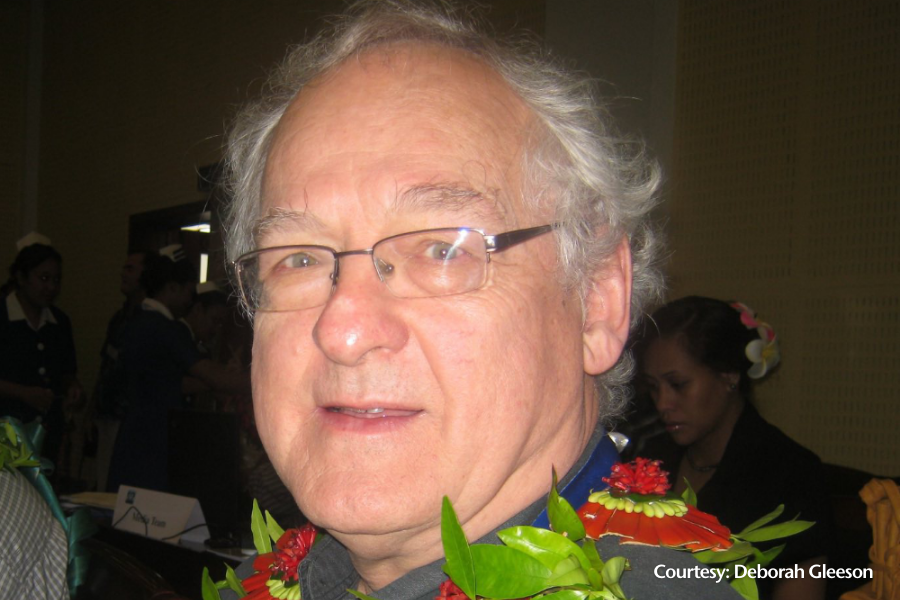
It is with deep sadness that we share the news that Emeritus Associate Professor David Legge died on 2nd February 2026. David was a vital and deeply respected member of the Public Health Association of Australia for many, many decades. David established the Political Economy of Health (PEH) Special Interest Group in recognition of the broader levers of health justice and the complexity of global economic and political structures that contribute to poor health outcomes and impede health care equity. He co-convened the PEH SIG for many years, organised many reading groups and workshops, and developed or revised most of the PEH policy position statements. Many members of PEH SIG joined the group in large part because of David’s vision, thinking, and ideas, and his ability to communicate complex ideas and bring people together to examine how public health and political systems thinking could improve health equity, locally and globally.
David also established the PHAA’s robust policy development process of using good evidence to make clear policy recommendations – an approach that has stood PHAA in good stead from the 1980s to the present day, and which has been admired by other public health associations.
David commenced his career in medicine before moving into academia in the 1980s. From 1996 to 2012, he taught public health, health policy and health services management in Melbourne and in China through LaTrobe University, while researching health challenges associated with China’s economic and political transition.
David embraced people from all cultures and groups and invited robust discussion and new ideas, no matter how random. He nurtured generations of public health scholars, advocates and activists in local, national and international settings. Until his death, aged 81, David continued to work as a tireless, critical leader in health justice advocacy and activism, and supported countless local, national and international actions to drive improved access to health services and health outcomes.
Remarkably, David co-founded the People’s Health Movement in Australia. Active in the International People’s Health Council from 1994, one of the eight founding organisations behind the birth of the People’s Health Movement (PHM) in Bangladesh in December 2000, he had actively led PHM programs, including the International People’s Health University, a short course program in the political economy of health for activists, and PHM’s Democratising Global Health Governance Initiative (WHO Watch).
He developed, led, and maintained the WHO Tracker (WHO Tracker | WHO Tracker), an essential part of PHM’s activities “watching” the World Health Organization with global collaborators. The policy analysis on the Tracker is used by many WHO country delegates and NGO advocates unaware the site was run by volunteer labour and in large part by David, showing his untiring commitment, dedication and incisive analysis.
David served as co-Chair of the Global Steering Council and was a crucial intellectual powerhouse behind the International People’s Health University (IPHU), the WHO Watch and the global governance project. David masterminded around 20 in-person and on-line IPHUs. Through these programs, he inspired countless people around the globe to understand the political and economic basis of health and illness. He showed students how the histories of colonialism and imperialism had a real impact on their lives today. Moreover, David was a leader of the trade and health thematic circle and inspired many to examine the ways in which understanding these deep structural relationships was so vital to understanding the dynamics of global health equity.
David was a fierce champion of the importance of comprehensive primary healthcare to health systems globally and in Australia. He was one of the key proponents of the community health movement in Australia from the early 1980s, and led research and practice to show the importance of community development to primary healthcare. David provided vital support to the Aboriginal health movement through the Co-operative Research Centre in Aboriginal Health, the Lowitja Institute and many Aboriginal Community-Controlled Health Services, especially the Central Australian Aboriginal Congress in Alice Springs. Most recently he brought his insights to a project documenting the history of community health in Australia.
David had been described as a living legend due to his life-long commitment to public health. While a modest description of his contribution to the world, it fails to capture his intellect, humanity, wisdom, and rare gift of creating safe spaces for provocative and inspiring discourse and encouraging even the most reluctant among us to contribute. He invited everyone to drink from his deep and complex wellspring of knowledge, regardless of their standpoint, and gently pushed them to do more than they imagined.
Quite simply, David was a unique, kind soul who has changed the world for the better. Not only does his legacy compel us to do better, using his endless written gifts and shared knowledge, it extends to the compassion we show each other during these worrying times and the ways in which we push ahead for a fairer, more just world. David’s personal website indexes a lot of his writings and presentations and is located at: https://davidglegge.me/ for those who wish to read his work and continue his legacy.
In 2004, David received the PHAA’s highest award, the Sidney Sax Medal, in recognition of his expertise and commitment not just to public health as a discipline but to the health and wellbeing of all people. The entire Public Health Association of Australia celebrates David’s distinguished career and expresses heartfelt gratitude for his commitment to, and solidarity with, so many communities and individuals over many years.


Leave a Reply