
PHAA Communications
It’s a scenario that many families can relate to – childcare is expensive, hard to secure or simply too inflexible and so the grandparents become regular babysitters.
With many families now having both parents working, Australia’s grandparents have become our biggest providers of informal care.
Which raises the question – what influence does grandparental care have on children’s health and is there anything we can do to set grandparents up for success?
New research published in the Australian and New Zealand Journal of Public Health helps answer these questions.
A survey of 1,190 grandparents looked at the amount of care grandparents are providing, and how they are filling these hours when it comes to both physical activity and screentime.
Researchers found that on average our superhero grandparents were providing almost 12 hours of care for grandchildren each week.
During this time children on average spent two and a half hours playing outdoors and just over three hours a week watching TV, movies, internet videos or playing phone games.
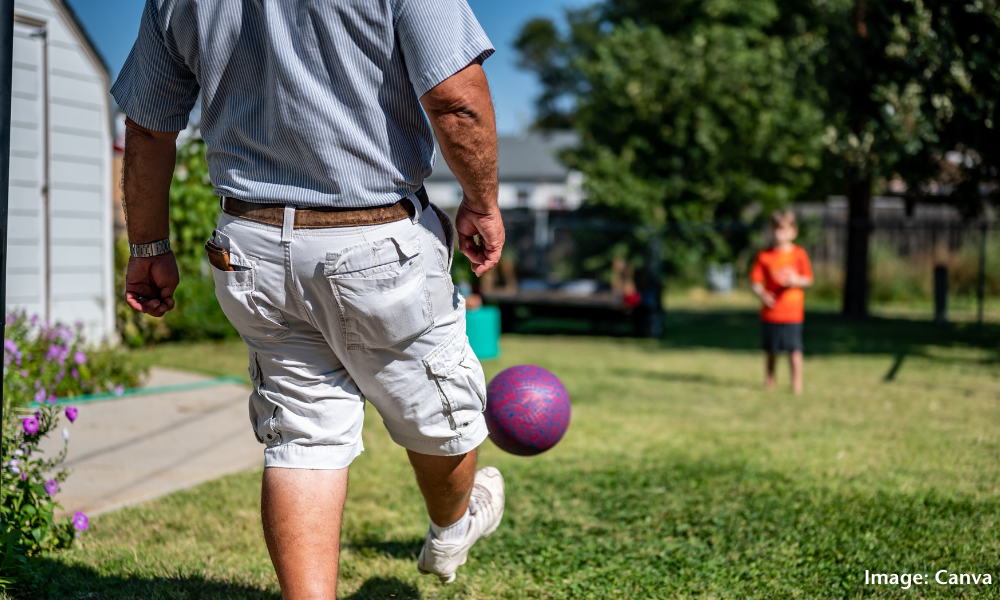
Encouragingly, the study found that most grandparents (77%) usually or always entertain their grandchildren with active play in the front or backyard.

Lead author Associate Professor Michelle Jongenelis from the University of Melbourne says it’s important to recognise and appreciate the increasingly vital role that grandparents are playing in children’s care and health.
“Grandparents are increasingly becoming more hands-on, caring for around one-fifth of Australian children when both their parents are working.
“We were very encouraged to find that most grandparents were facilitating lots of outdoor play for their grandchildren. But we can also see a trend of utilising screentime.
“This is a problem all caregivers face. For both parents and grandparents moving children away from screentime can be difficult. Screentime was more common in older grandchildren and we think this reflects the difficulty of overcoming children’s persistence regarding screentime.”

The findings from the study also point to possible solutions from a public health perspective.
Less than half of grandparents reported using a local park or playground. Using active transport, for instance riding a bike or walking to school, was also less common.
“These results highlight the importance of creating physical environments that make things easy for grandparents,” says Assoc Prof Jongenelis.
“Good quality and accessible local parks and playgrounds can assist with encouraging outdoor play. Neighbourhoods with active transport opportunities to and from schools and other destinations could also help grandparents find ways to embed exercise into babysitting schedules.
“The Australian Government’s National Preventive Health Strategy already identifies the comprehensive action needed to keep Australians active.
“This includes things like prioritising open spaces such as parks and playgrounds and active transport networks when designing urban environments, as well as enhanced support for children’s parents and other carers to promote physical activity.”
Public Health Association of Australia CEO, Adjunct Professor Terry Slevin says that the research is a powerful reminder of the need for Government’s National Preventative Health Strategy to be fully funded and implemented.
“Encouraging more physical activity during grandparent and child time will help both generations stay healthy and avoid preventable disease.”

The Australian and New Zealand Journal of Public Health is published by the Public Health Association of Australia. The PHAA Communications team worked with the University of Melbourne to help promote this research to media, and the research was a hot topic for radio stations across the country, stimulating lots of discussion and talkback.
You can listen to Professor Michelle Jongenelis talk to ABC Sydney Mornings here (from 1:52).
Leave a Reply