Nadine Hillock, Babatunde Balogun, and Andrea Britton
From 18-24 November, the world will observe World Antimicrobial Resistance Awareness Week 2026, a global campaign dedicated to addressing one of the most critical public health threats.
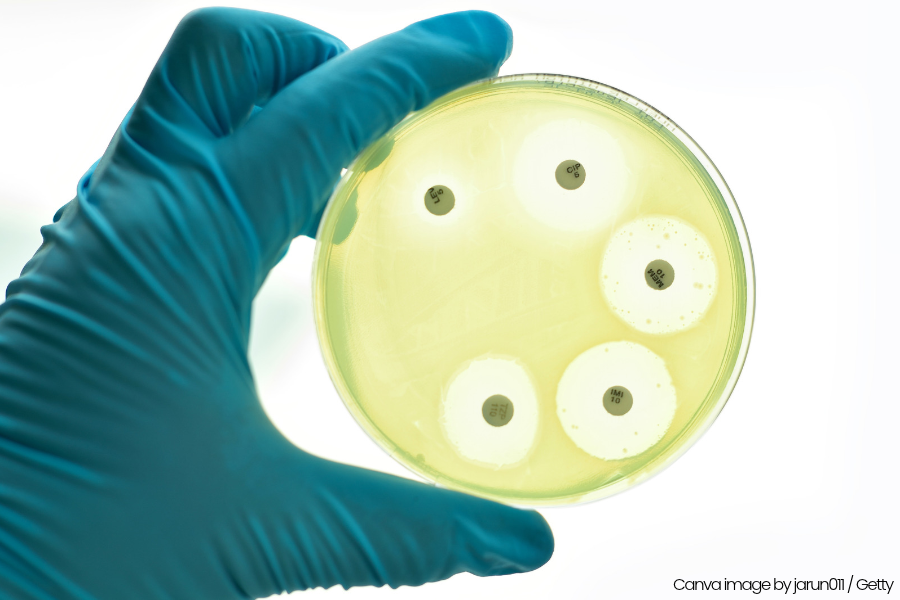
Since the 1940s antimicrobials, like penicillin, have been used to treat and prevent infections. However, when microbes (bacteria, viruses, fungi and other pathogens) develop resistance to the medicines designed to kill them, common infections become much harder — and sometimes impossible — to treat.
Antimicrobial resistance (AMR) is not only a threat to human health. AMR threatens healthcare systems, food security, economic productivity and public confidence in modern medicine. The World Health Organization (WHO) has called for the adoption of the Global Action Plan on AMR 2026-2036. Multisectoral engagement and antimicrobial use surveillance systems have demonstrated the strongest associations with improvement in reducing AMR. The theme for this year’s week emphasises the importance of a One Health, cross-sectoral approach to curbing AMR, and calls for “One Health, One Action: Prevent AMR Now”.
Antimicrobial overuse is a key driver of AMR. Australia has a consistently high rate of antimicrobial use internationally, particularly when compared to other high-income countries. The effectiveness of antimicrobial medicines is gradually being eroded, placing routine medical procedures and treatments at increasing risk. Drug-resistant infections can complicate cancer treatment, organ transplantation, joint replacement surgery, caesarean sections and many other procedures, increasing the risk of poor outcomes including death.
Antimicrobial Use and Resistance in Australia (AURA) is the national surveillance program for human health which is overseen by the Australian Centre for Disease Control (CDC). AURA monitors the volume and appropriateness of usage and identifies the emergence and spread of resistant organisms. While accurate death rates due to AMR are difficult to determine — due to under-reporting on death certificates — in 2021 it was estimated that approximately 1,700 deaths in Australia were directly attributable to AMR, while around 7,840 deaths were associated with drug-resistant infections.
In 2022, Australian research examining major hospital-associated resistant infections estimated more than 1,000 AMR-associated deaths annually, together with substantial healthcare and economic costs. While testing for AMR in Australian livestock (pork, chicken meat and egg) and seafood industries has shown little to no resistance to antimicrobials to date, integrated surveillance — including companion animals — is necessary to better understand potential resistance pathways and enable One Health intervention strategies.
A One Health approach highlights the interconnection of human, animal and environmental sectors. Antimicrobials used in hospitals, medical clinics (human and animal), livestock production, and aquaculture can all contribute to the emergence and spread of resistant organisms, especially if used inappropriately. Resistant microbes and antimicrobial residues can move through food systems, waterways and ecosystems, creating pathways that link human, animal, and environmental health.
Australia has made considerable progress towards addressing the risk of AMR through stewardship programs in hospitals and in primary care. Surveillance initiatives such as AURA, and efforts to promote responsible antimicrobial use across healthcare, veterinary clinics, and agricultural sectors like the AMR Vet Collective have also helped. Maintaining this progress will require sustained investment in integrated One Health surveillance systems, infection prevention and control, diagnostics, vaccination programs, and research into new antimicrobial therapies.
Everyone has a role to play. Preventing overuse of antimicrobials by prescribing them only when clinically necessary. Selecting appropriate agents and adhering to evidence-based guidelines and stewardship principles remain among the most effective tools available. Antimicrobial consumers can contribute by following prescribed treatment regimens, avoiding pressure on clinicians for unnecessary antimicrobials, following infection control advice such as vaccination and hand hygiene, and disposing of unused antimicrobials appropriately. Farmers, veterinarians, researchers, public health agencies, policymakers and environmental scientists all have a role in minimising the drivers of resistance while protecting food production, animal welfare, and environmental sustainability.
The message for this week is both simple and urgent. Antimicrobial resistance is not a future threat — it is already affecting lives in Australia. Preserving the effectiveness of antimicrobials requires coordinated and sustained action from government, human and animal health sectors , industry, and communities. By embracing the principle of “One Health, One Action,” Australia can help protect these essential medicines for future generations.
For more information:
- Australia’s One Health Master Action Plan
- Australia’s National AMR Strategy – 2020 and beyond
- PHAA Antimicrobial Resistance and Stewardship Policy Position Statement
- WHO series of webinars for WAAW 2026
- ACSQHC resources for WAAW 2026 including consumer quizzes, email banners etc
- Sixth Australian report on antimicrobial use and resistance in human health (AURA report)
Dr Nadine Hillock is a senior research fellow at Flinders University, and member of the South Australian Antimicrobial Stewardship Clinical Network
Dr Babatunde Balogun is a Health management academic at UNSW School of Population Health, with research interests in strategic health communication, public engagement and consumer behaviour.
Dr Andrea Britton is Co-Convenor of the Public Health Association’s Environmental and One Health Special Interest Group. She is also a One Health advisor and director, Ultimate Efficacy Consulting Ltd.
All three were co-authors of the PHAA policy position statement on AMR and stewardship.
Leave a Reply