
Malcolm Baalman
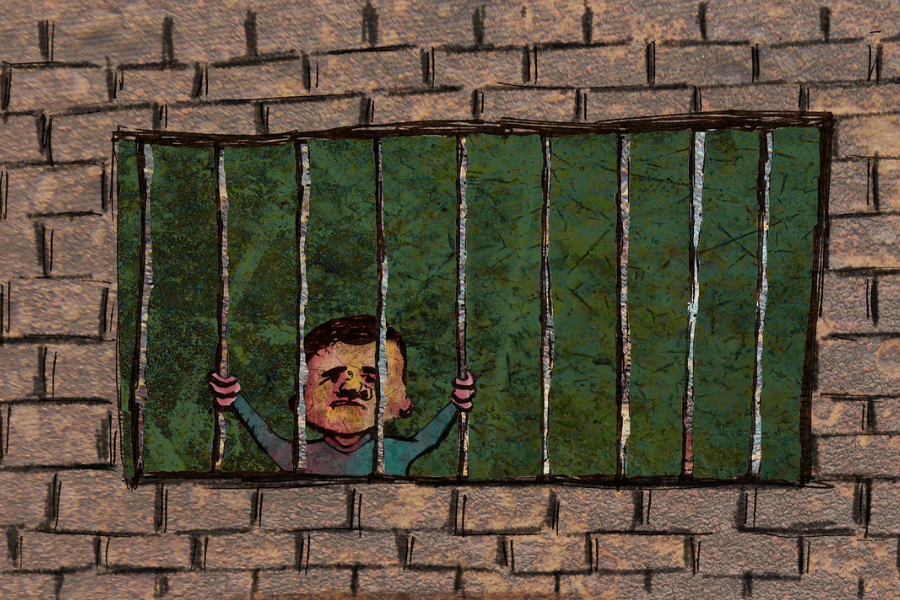
Across Australia, at any time, around 400 children aged 10 to 13 are incarcerated for criminal actions. Over 50% of these are Aboriginal and Torres Strait Islander kids.
Public health takes a lifelong perspective on the health of populations and the impact that all people have on those around them. From this perspective, criminality and incarceration are major public health issues, as is the rolling political argument about the age of criminal responsibility in Australia.
Over several years, proposals to “raise the age” have been running in almost every state and territory jurisdiction, and nationally.
In prosecuting criminal acts, criminal law requires not only that actions are committed, but that the accused has a ‘mental state’ of intending to commit the crime.
The general law in Australia is that any child under 10 years of age cannot possibly have that state of mind. Any child aged from 10 to 13 is strongly presumed by the law not to have had such an intention, and prosecutors pressing charges must prove otherwise.
In any case, prosecutors need to prove that an accused person intended to commit the crime, whatever their age.
In recent years, with various degrees of reluctance, jurisdictions have been moving to raise their age requirements towards 14.
One key driver for change has been international law, with the UN Committee on the Rights of the Child advising in 2019 that the general standard for criminal responsibility worldwide should be age 14. This reflects the UN Convention on the Rights of the Child treaty, of which Australia is a signatory.
In 2020, the national ministerial council of justice ministers received detailed advice on the case for raising the age to 14, but at the direction of the (previous) federal government the report was kept from publication; consensus could not be achieved, and progress was delayed.
The campaign has pressed on, and more recent advances have been:
- The Northern Territory legislated to raise the age to 12 in 2023.
- The ACT legislated to raise the age to 12 in 2023, and to 14 by 2025 (with exceptions for a small number of serious crimes of violence).
Other jurisdictions are in the process of debating change:
- Victoria’s government has announced a policy to raise its age to 12 in the next few years, and was committed to raising it further to 14, but has recently announced that it is dumping the age 14 commitment.
- In Western Australia, the governing Labor Party conference has adopted a policy of raising the age to 14, although no legislation has yet been advance to achieve this.
- In Queensland, a parliamentary committee has recommended that the age be raised to 12.
- Tasmania has announced that it will raise the minimum age for courts making sentences of detention to 14, but with no change to the rules relating to criminal responsibility.
The Tasmania position reminds us that in many ways, the practical issue is whether children become physically incarcerated. We know that youth incarceration increases the prospect of future criminal behaviours and repeat incarceration.
There is also a powerful racial component to incarceration in Australia. Aboriginal and Torres Strait Islander people represent around 3% of the population, but 33% of the roughly 40,000 people incarcerated in Australia at any time.
In the Northern Territory, the racial imbalance of incarceration is even starker, with almost all people incarcerated in the Territory being Indigenous.
The situation highlights that social and economic determinants not only drive Indigenous people into the justice system, but keep them there.
In this context, the ‘law and order’ policy of the new NT government to lower the age of criminal responsibility from 12 back down to 10 is entirely counter-productive.
To the extent that it succeeds in putting into prison any number of 10- and 11-year-old children with behavioural problems, it is creating more future crime and incarceration, not less.
The Territory Government’s political desire to demonstrate that it is protecting the community from the actions of 10- and 11-year olds is misguided. It is with near certainty exposing the community to more and more serious criminal behaviours in future years.
Youth offending is a serious problem, but PHAA believes that governments have a responsibility to find another way.
Misconduct by children arises from social and economic factors, such as poverty and neglect.
The claimed dissuasion effect of declaring serious penalties clearly does not work with the children in question.
‘Criminal’ behaviour by children will not be reduced by harsh, expensive and counter-productive criminal law policies, but by intervening to address the underlying drivers of the behaviour.
Many have spoken out about the NT’s new policy and other nationwide political moves against raising the age. Former Liberal ACT Chief Minister and co-chair of the Justice Reform Initiative Gary Humphries, writing recently about the ACT, says that:
“The ACT has the lowest incarceration rate in Australia, but it also has the highest rate of people returning to prison, with 80% of all detainees having been in prison before.
“What this suggests is that imprisonment fuels, rather than deters, criminality.
“The evidence is overwhelming that a high proportion of our prison population nationally consists of people with complex social, intellectual, health and interpersonal problems which are exacerbated by incarceration.
“In these circumstances, jailing is “correctional” in name only.”
Karly Warner, chair of National Aboriginal and Torres Strait Islander Legal Services, has warned that the NT’s proposed policy will result in a “child jail crisis”, and that there should instead be greater investment in prevention programs.
Chris Cunneen, Professor of Criminology, University of Technology Sydney, and other criminologists wrote last week that “politically inspired law and order policies operate in a parallel universe to the real effects of criminalisation and imprisonment.
“For example, we know a low age of criminal responsibility is contrary to human rights standards, out of kilter with most countries, contrary to what we know of children’s developmental stages, and entrenches children in the criminal legal system.”
If the NT policy proceeds, the Territory Government should be held to account for every 10- or 11-year-old jailed.
Each case is not only an individual tragedy, but represents the needless creation of more future crime, cost and community suffering for the remainder of that individual’s life, affecting all those around them.
Image: Roy Blumenthal / Flickr
Malcolm Baalman is the Senior Policy and Advocacy Adviser at PHAA.
Leave a Reply