Nadia August
We’re calling on the next Australian Government to invest in First Nations people’s health to close the gap in life expectancy and health outcomes. Find out more on the Public Health Association of Australia’s 2025 Election Priorities site.
This is part of an ongoing series explaining our 2025 Federal Election asks. Read the other articles in the series here.
The 2025 Close the Gap Report was released today, Thursday 20 March. The lack of progress on health outcomes among Indigenous Australians, against almost all indicators, is shocking.
The goals of the Closing the Gap government commitment made 15 years ago are still not being met, maintaining the disadvantage and health inequality of First Nations communities and people.
The government has taken a ‘business-as-usual approach’ that Productivity Commissioner and Gungarri man Selwyn Button described as the definition of insanity.
The latest available data, released by the Productivity Commission in March 2025, shows that the targets for Early Childhood Education, Economic Participation, and Land and Waters have improved and appear to be on track, while seven areas are not on track, or have not changed.
Frighteningly, four areas are worsening – with fewer Aboriginal and Torres Strait Islander children being assessed as developmentally on track, more children being in out of home care than five years ago, and the rate of suicide in the community at its highest since 2018.
Aboriginal and Torres Strait Islander children born at the beginning of this decade have a life expectancy at least eight years less than their non-Indigenous peers.
Australia needs an adequately funded, comprehensive approach to Closing the Gap
The failure to achieve Closing the Gap targets highlights the lack of adequate on-the-ground investment and empowerment of community-controlled health services.
To truly reduce the incidence and prevalence of chronic and infectious diseases, there needs to be a greater investment specifically in prevention strategies, and a whole-of-life-span approach to reduce the burden of disease and life expectancy gap.
A comprehensive approach will address many related priority areas including substance use, nutrition and food security, mental health, suicide prevention, family and domestic violence, and secure and safe housing.
The intention to take a comprehensive approach involving prevention, management, and treatment has been detailed in the National Aboriginal and Torres Strait Islander Health Plan 2021–2031, the National Aboriginal and Torres Strait Islander Suicide Prevention Strategy 2025–2035, and the Aboriginal and Torres Strait Islander Action Plan 2023-2025.
What is missing is funding and government action.
In 2022, estimates obtained by the National Aboriginal Community Controlled Health Organisation were that the total gap in health expenditure for Aboriginal and Torres Strait Islander health was $4.4 billion per year, of which $2.6 billion was the Commonwealth’s share. This equates to a gap of just over $5,000 per Aboriginal and Torres Strait Islander person compared with non-Indigenous Australians.
The health gap cannot close if this extensive funding gap continues, no matter how many plans are written.
First Nations health outcomes improve with community-led services
The Public Health Association of Australia (PHAA) strongly supports the delivery of health services to First Nations people through Aboriginal Community Controlled Health Organisations (ACCHOs), because community-controlled services generally achieve better results for Aboriginal and Torres Strait Islander people.
ACCHO health services provide comprehensive primary healthcare that incorporates disease prevention and health promotion, are strongly informed about social determinants of health relevant to their clients and are uniquely placed to manage cultural matters while providing health services.
This is core to culturally safe health services and requires adequate funding and support to meet community needs.
Culturally safe healthcare is comprised of respectful services, positive patient experience, and accessibility. Health services need to be free from racism, operate from locations where culture is respected, and ensure that respect is reflected in the service’s policies and practices.
A strong Aboriginal and Torres Strait Islander health workforce is critical to ensure this, and we want to see continuing increases in the number of Aboriginal and Torres Strait Islander medical practitioners, nurses, and midwives.
To this end, PHAA supports the full funding and implementation of the National Aboriginal and Torres Strait Islander Health Workforce Strategic Framework and Implementation Plan 2021–2031.
Lastly, accessibility is critical, with availability, distance, affordability, cultural appropriateness, and previous direct or indirect experiences of racism in health care presenting barriers to access.
When we make things hard to access, fewer people access them. In such conditions, we will continue to see no improvement in the disparities between First Nations Australians and the rest of the population.
This information is not new. It is contained in many government plans, strategies and reviews, well intentioned and well designed to address the very real challenges to Aboriginal and Torres Strait Islander health.
But what we need now is bold action to do the things recommended in those plans – to step up and commit to increasing funding and implementing long-standing recommendations to genuinely support Aboriginal and Torres Strait Islander health, in partnership, for health equity.
Nadia August is PHAA’s Senior Policy and Advocacy Adviser.
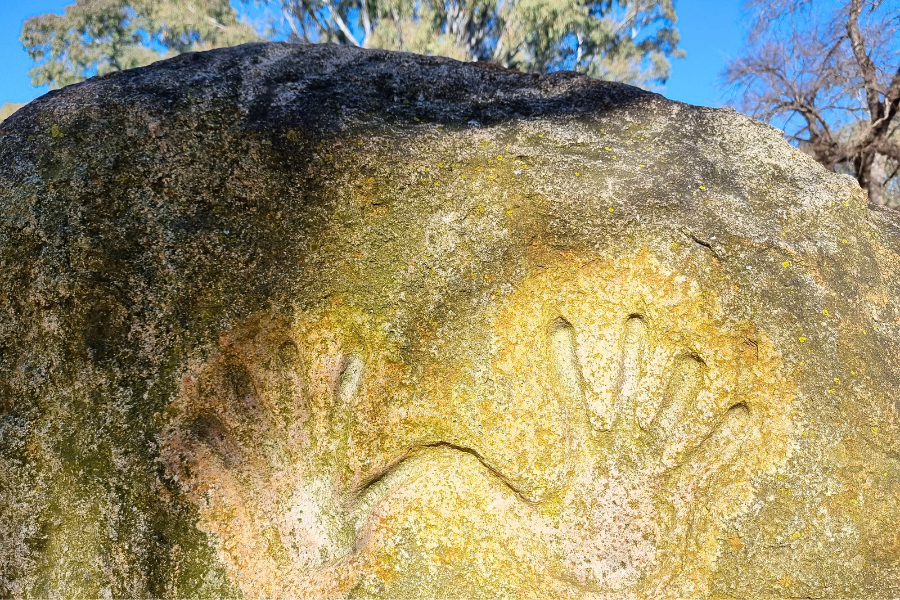
Image: Hand imprints on Marmungun Rock in Wangaratta, taken by Penelope Smith.
Leave a Reply