Melissa Tahu and Peter Tait
To date, discussion of waste-to-energy incineration has focused on the potential health effects of incinerators. However, other social and economic effects of waste management and incineration need to be brought into the policy conversation.
Australia has a garbage problem. Between 2022-23, Australia produced approximately 75.6 tonnes of waste. This is an increase of 1.8% from 74 million tonnes in 2021-2022, which is a 1.2% increase in tonnes per capita. The Australian Government developed the 2018 National Waste Policy, which outlines key principles for effective waste management; however, states and territories are responsible for regulating domestic waste. State governments are adopting waste-to-energy incineration for some of their waste management and greenhouse gas emission mitigation.
Waste to energy incineration is a process in which municipal waste is burned, and its by-products, such as steam and solid residues, are recovered for economic purposes. In Australia, such plants are in use at sites such as Dry Creek in South Australia, Dandenong South in Victoria,6 and Willawong in Queensland, with new plants currently under construction across states, including New South Wales, Victoria, and Queensland. (Co-author Dr Peter Tait was interviewed for the ABC-TV 7:30 program below).
Waste to energy incineration is also used in countries such as China, Japan, the United States, and parts of the European Union. Although various benefits of the process have been cited, several challenges have been associated with this type of waste management.
Evidence indicates that these incinerator plants have the potential to generate revenue from the sale of electricity and ash, as well as from tipping fees. However, the costs associated with plant design, construction, commissioning and ongoing operation and maintenance may make this option unfeasible or unsustainable for some countries, especially those with low levels of waste.
The process may also be less cost-effective compared to other renewable energy sources. The Levelised Cost of Electricity is a measure of the costs associated with producing electricity from a source over its lifetime; a lower levelised cost indicates greater energy efficiency. Compared with other sources, such as solar electricity, wind turbines, and hydropower, waste-to-energy incineration presents with either a similar or higher levelised cost. Therefore, although the process may provide avenues for increased revenue, establishment and operational costs may be excessive and less cost-effective than other types of renewable energy.
From an environmental perspective, waste-to-energy incineration produces some favourable outcomes. Firstly, it produces considerably fewer greenhouse gas emissions like carbon dioxide, compared to landfill. Because it produces electricity, it also reduces reliance on fossil fuels. The creation of potable water from steam production, which is especially important in areas most affected by climate-change-induced droughts, as well as an overall reduction in landfill, are additional benefits. However, studies have not compared emissions reductions from this process with a transition to renewable energy sources.
Nevertheless, international research has identified various negative impacts associated with this type of waste management. Heavy metals, including lead, have been detected in incinerator ash. Fly ash also contains toxic by-products and harmful levels of sulphur dioxide (SO2), hydrogen chloride (HCl), hydrogen fluoride (HF), and nitrogen dioxide (NO2) have been found in gas produced from incinerator flues. This suggests that although the incineration process may have some environmental advantages, these may be undermined by adverse effects. Older design incinerators have also been associated with adverse health effects. Insufficient time has passed to assess the health effects of newer incinerators.
Further, there are implications for communities’ confidence in the government’s intent and ability to look after people and the planet, which need to be part of the conversation. Top-down approaches focusing on emissions reduction often fail to consider communities’ opinions and concerns about incinerators’ potential health implications. In addition, communities outside metropolitan areas are frequently expected to bear all the risks associated with such incinerators in their area, which is an issue that affects diverse populations worldwide.
A circular economy is an alternative approach to waste management that focuses on the “reduction, reuse, recycling and recovery” of materials. Circular economies seek to minimise the production of waste by keeping materials in use, such as through recycling, reusing or refurbishing. A 2024 United Nations Global Waste Management report recommended the urgent implementation of circular economies to tackle rising levels of global waste. The report also highlighted known concerns associated with incinerator plants, including toxic emissions, hazardous material disposal, and hazardous by-products.
Circular economies display several advantages. Importantly, they reduce consumption of natural resources, help protect against the loss of biodiversity, and create additional jobs. Second, compared to incineration, a circular economy can reduce greenhouse gas emissions on a large scale by encouraging the reuse and recycling of materials, especially concrete, steel, aluminium, and plastics. It could reduce such emissions by up to 40% by 2050.
However, implementing a circular economy can be complex. For instance, transitioning to more regenerative practices for small businesses may require a significant investment in time and money. Businesses and organisations may also require specific training and ongoing support.Despite the challenges, sustaining a complex urban industrial society requires governments to implement existing waste management strategies aligned with circular economy principles.
While incineration provides a local or regional approach to address excessive landfill levels, together with generating renewable energy, hazardous outputs may deem this approach to waste management as offering short-term benefits with long-term negative environmental effects. Whole-of-system approaches, such as circular economies, are a necessary approach to managing Australia’s waste and minimising landfill.
Governments, society, media, and public health practitioners need to move the discussion of waste-to-energy incineration beyond health effects. It sits in the broader context of waste management and emissions mitigation. People outside cities are rightly skeptical when governments impose these facilities on their communities, and expect locals to bear the risks. These factors need to be part of the conversation.
Melissa Tahu is undertaking a Master of Medical Science at the University of Tasmania, and is a former intern at the Public Health Association. Dr Peter Tait is a general practitioner based in Canberra / Ngunnawal and Ngambri Country, and an Honorary Clinical Senior Lecturer at the ANU School of Medicine and Psychology.
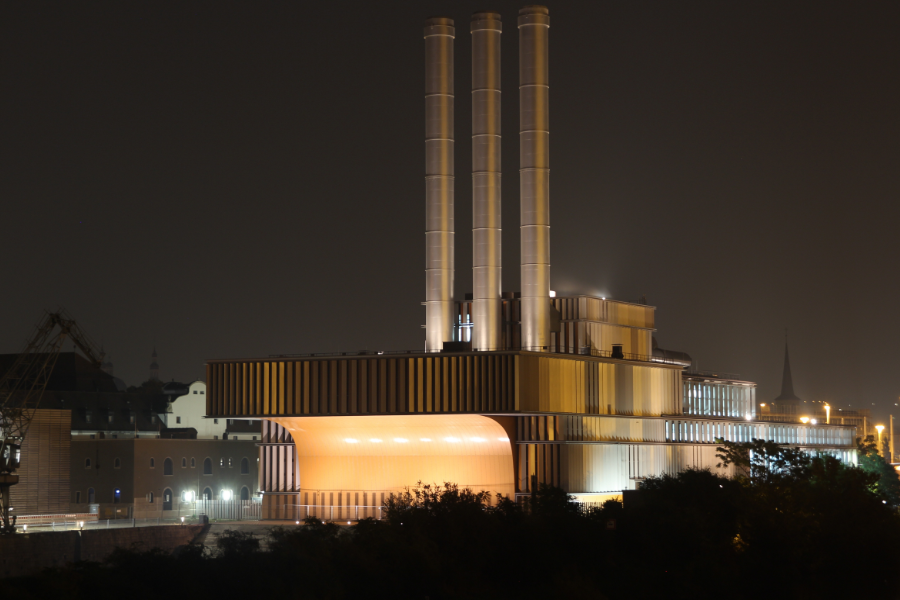
Photo: Incinerator in Würzburg by Marco Umminger/Pixabay
Leave a Reply