Raglan Maddox and Danny Allende
They playing with fire they gonna get burned
Voice of resistance we standing firm
They paid us in rations got smoke in our lungs
Now we smoking the system the tables have turned
In April 2026, during Youth Week, a new national campaign emerged, one that feels both familiar and entirely new. Familiar in its urgency, and new in its leadership. Voices of Resistance is not simply a song. It is a statement, a strategy, and a shift in how public health is being done.
Led by Aboriginal and Torres Strait Islander young people, Voices of Resistance sits at the centre of the Warraay Puthu (“Bad Smoke” in Ngiyampaa language) movement, a youth-led initiative grounded in culture, truth-telling, and evidence-based public health action.
This is what community-led health promotion looks like in practice.
A different starting point: truth-telling and structural accountability
For too long, public health responses to smoking and vaping have focused heavily on individual behaviours. But Aboriginal and Torres Strait Islander young people are asking a different question:
Why are communities still blamed, while the role of the commercial tobacco and nicotine industry is often overlooked?
The answer lies in history and in systems.
Commercial tobacco was systematically embedded into Aboriginal and Torres Strait Islander communities nationally through colonisation, including as a form of payment through rations into the late 1960s. Today, the legacy of those systems remains visible in ongoing inequities in health, and exposure to industry tactics.
More than one in three Aboriginal and Torres Strait Islander peoples die from tobacco-related disease. This is not simply a matter of individual choice, it reflects the long-term impacts of structural conditions, targeted marketing, and regulatory gaps.
This framing aligns with a growing body of work in public health that centres the commercial determinants of health, recognising that industries shape environments, behaviours, and outcomes.
Youth leadership as public health intervention
What makes Voices of Resistance particularly powerful is not just the message, but who is delivering it.
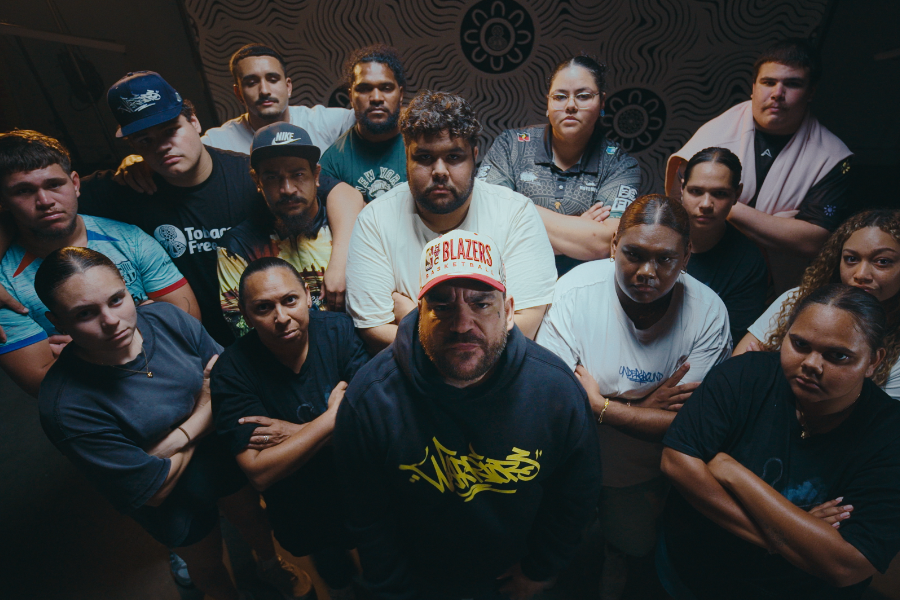
Across just one week in late 2025, young leaders and Tackling Indigenous Smoking (TIS) teams from across the country came together to write, record, and film the track alongside artists including Nooky, Dallas Woods, Soju Gang, Fred Leone and RIAH.
But this was not a one-off creative project. It was a deliberate intervention.
Youth and young peoples were trained in evidence-based communication, storytelling, and digital production, building capacity to continue creating and sharing content within their own communities. This model reflects a shift away from top-down messaging toward community-owned and sustained health promotion.
As Soju Gang reflected, this approach is different:
Programs are often created by institutions and expect young people to engage. This one was created by young people, and the program was built around that.
Why this matters now
Nearly half of the Aboriginal and Torres Strait Islander population is under the age of 25. This represents both a challenge and an opportunity.
We know that most people who do not take up smoking or vaping during adolescence are unlikely to start later in life. This creates a critical window for prevention.
At the same time, young people are navigating an increasingly complex nicotine landscape, one shaped by new products, evolving marketing strategies, and ongoing industry adaptation.
Traditional health promotion approaches are not always keeping pace.
Voices of Resistance offers a different model, one that is:
- Youth-led
- Culturally grounded
- Structurally informed
- Digitally native
And importantly, one that resonates.
Early impact
The early response suggests this approach is cutting through. The movement has had:
- Over 1,300 streams of the Voices of Resistance track
- 17,500+ views on the main Instagram video
- More than 195,000 total views across Warraay Puthu content
- Reaching over 40,000 unique accounts
In addition to strong digital engagement, the movement secured airtime during a sold-out AFL match between Fremantle Football Club and St Kilda Football Club at Optus Stadium, reflecting growing national visibility for youth-led, culturally grounded prevention messaging. The movement also received strong engagement at the World Indigenous Cancer Conference, highlighting its relevance across both community and professional audiences.
While these metrics are early indicators, they point to something more significant: young people are engaging with content that reflects their realities, voices, and priorities.
From awareness to action
Beyond awareness, the campaign is designed to support action.
The song itself includes direct messages about quitting and support pathways:
“There’s help around in your cities and towns… quitting ain’t as hard as you think.”
It also connects audiences to practical supports, including Quitline and culturally appropriate services.
At the same time, the broader Warraay Puthu campaign creates space for action, encouraging communities to speak back to the tobacco and nicotine industry and demand change.
A model for public health and health promotion
Effective public health requires information, but it also requires engagement, trust, and relevance. The Voices of Resistance campaign demonstrates how this can be achieved through:
- Indigenous leadership and governance
- Cultural grounding and storytelling
- Structural framing and capacity building
Importantly, this work reflects what real national best practice looks like in contemporary health promotion, grounded in community leadership, culture, and evidence, and represents an approach that has been supported and developed with communities over many years.
This approach has been shaped and driven through sustained Aboriginal and Torres Strait Islander-led tobacco control work, including leadership from the Tobacco Free Program at Yardhura Walani, the National Centre for Aboriginal and Torres Strait Islander Wellbeing Research. This work has clearly helped to generate and embed best practice evidence, and translate it into community-led, practice-ready prevention strategies.
It also reflects the growing evidence base, highlighting the importance of addressing the commercial determinants of health, and the role of the tobacco and nicotine industry in driving inequities, disease, and death.
It also reflects a consistent message emerging from research:
when communities lead, outcomes improve.
Looking forward
The Warraay Puthu campaign is just beginning.
Over the next two years, it will continue to roll out nationally, supporting young people and communities to lead prevention efforts and shift norms around smoking and vaping.
At its core, this is about more than tobacco.
It is about sovereignty.
It is about truth-telling.
And it is about ensuring that future generations grow up free from the harms of commercial tobacco and nicotine.
Associate Professor Raglan Maddox (Bagumani (Modewa) Clans, Papua New Guinea), is lead of the Yardhura Walani Tobacco Free Program at the Australian National University. He is also a co-convenor of the PHAA Alcohol, Tobacco, and Other Drugs Special Interest Group.
Danny Allende is team manager for the Na Joomelah Tackling Indigenous Smoking program operated by the La Perouse Local Aboriginal Land Council in the greater Sydney and Illawarra region.
Image: A still from the Voices of Resistance Campaign/Waraay Puthu.
Leave a Reply